

I fell in love with building on OpenAI. I relied on its $100-per-month tier to build, launch, and maintain a company website. I shipped features, refactored code, and produced content in hours, not weeks.
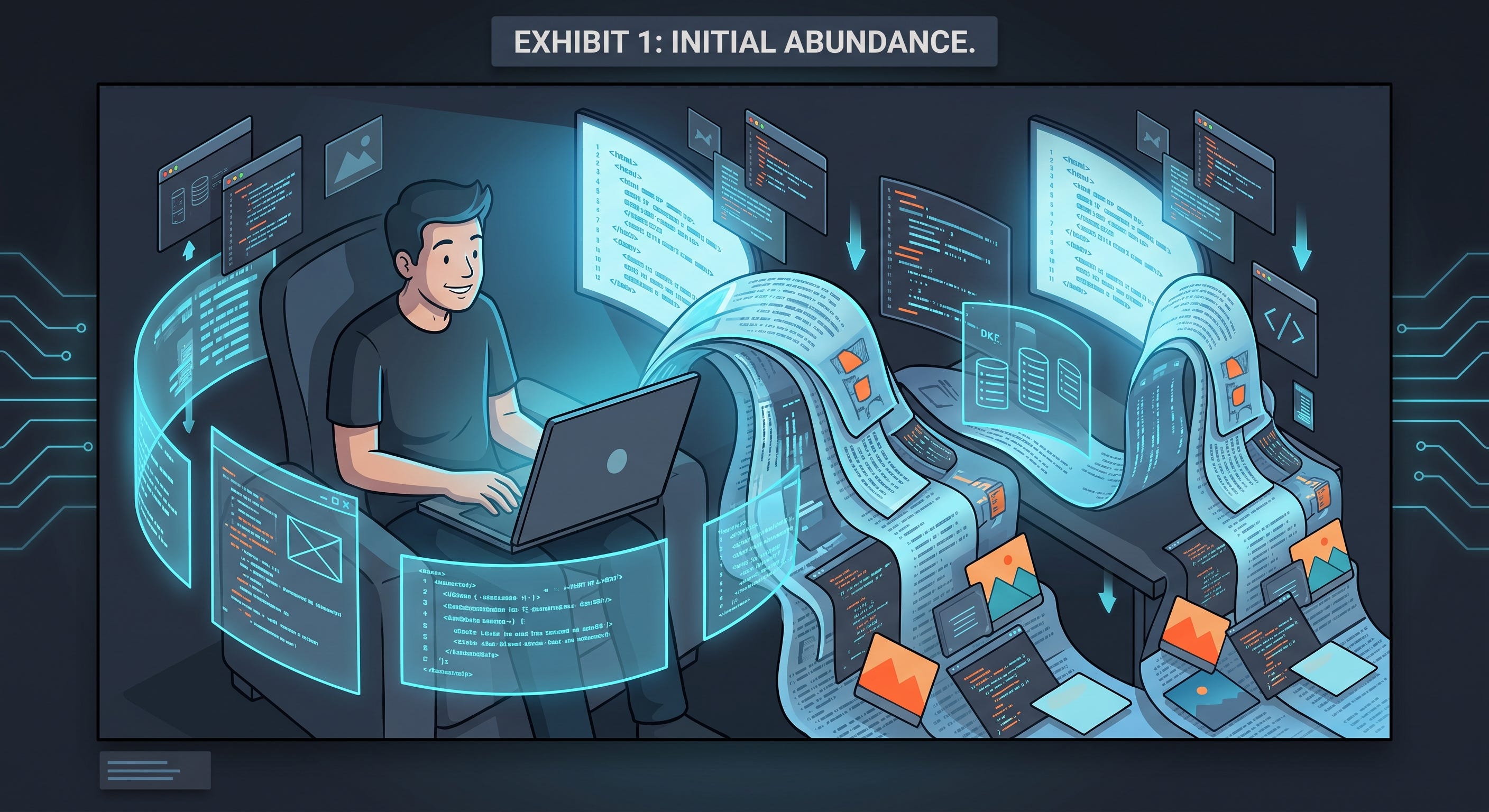
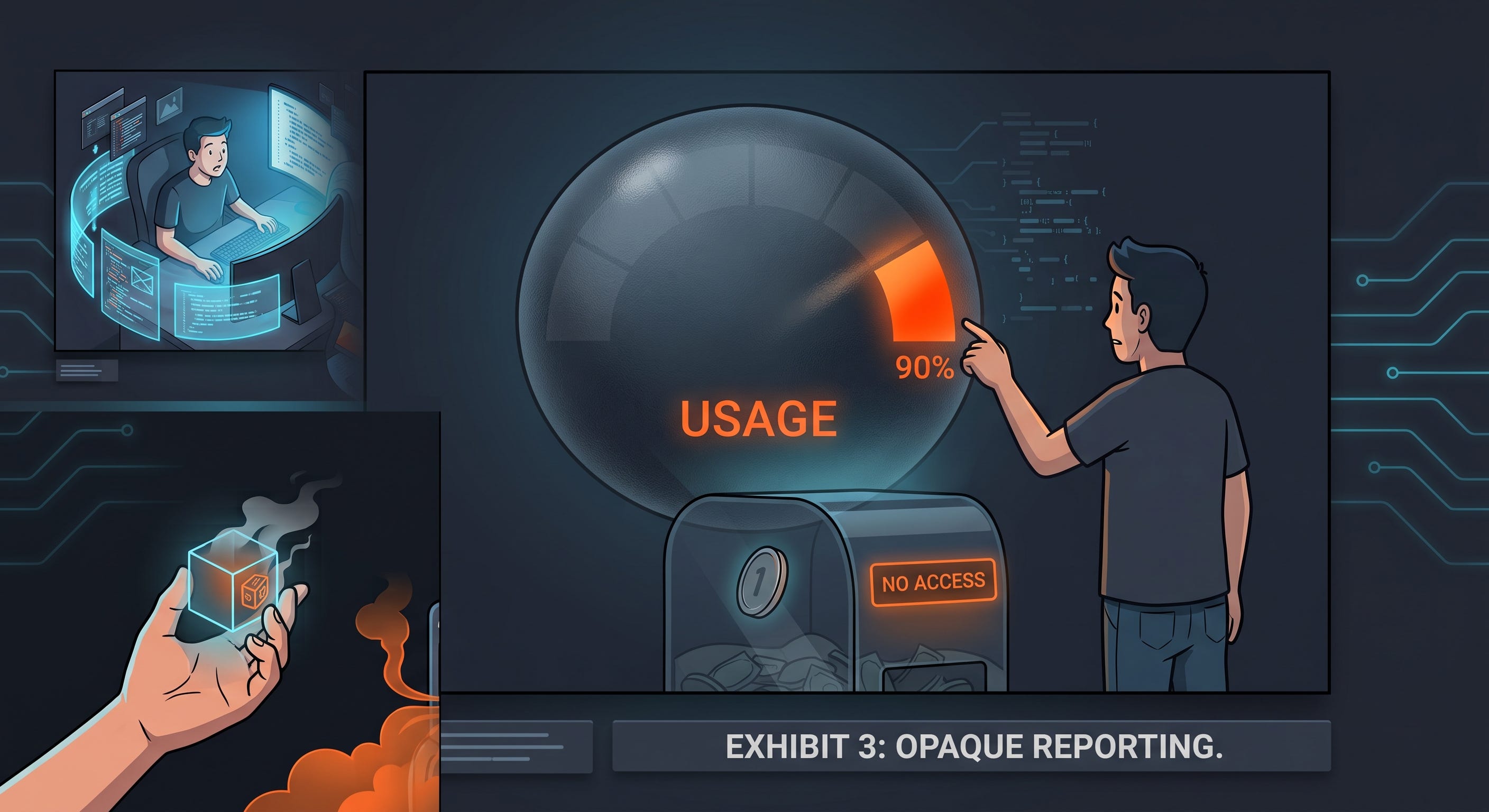
Then the workflow hit a wall. The platform told me when I had “7% left,” but it did not give me a useful operating picture:
What consumed the capacity
How much each task cost
How background work affected usage
When each allowance would reset
How to pace the remaining capacity
I received a percentage, not a usage report.
That is not enough when an AI tool becomes part of a company’s production stack.
Luckily, OpenAI built in supplemental packs I could use when it ran out, which helped, but until I found the solution, I was in the dark.
“Unlimited” Often Means Something Else
This problem extends beyond AI.
I recently switched to an Optimum internet and mobile bundle after a representative told me the mobile service included unlimited data — I agreed to the switch over the phone. Less than a month later, I received a warning:
Your available Local Data included in your plan is running low, with only 4.45 GB remaining.
After the included data ran out, my service slowed down.
Optimum does disclose that its Unlimited plan includes 20 GB of premium data, while Unlimited Max includes 50 GB. But that distinction is not what the word “unlimited” communicates during a sales conversation.
If there is a countdown, the service is limited.
A clearer description would be:
20 GB of high-speed data, followed by service at reduced speeds.
That tells the customer what they are actually buying.
“Unlimited” has become a marketing term for products with real operational limits. The customer may retain access, but speed, quality, capacity, or usefulness can decline after an undisclosed or poorly explained threshold.
The service may remain technically available. The experience the customer believed they purchased does not.
This same phenomenon occurs across the industry.

When Limits Break the Workflow
Rate limits are understandable. AI computing capacity costs money. Mobile networks have capacity constraints. No subscription can support infinite use at maximum performance. But limits become a business problem when they appear without enough warning or explanation.
Once a website is live, even a small update can require an AI agent to inspect multiple files, understand dependencies, make changes, test them, and review the result. A request that sounds simple can consume far more capacity than the user expects.
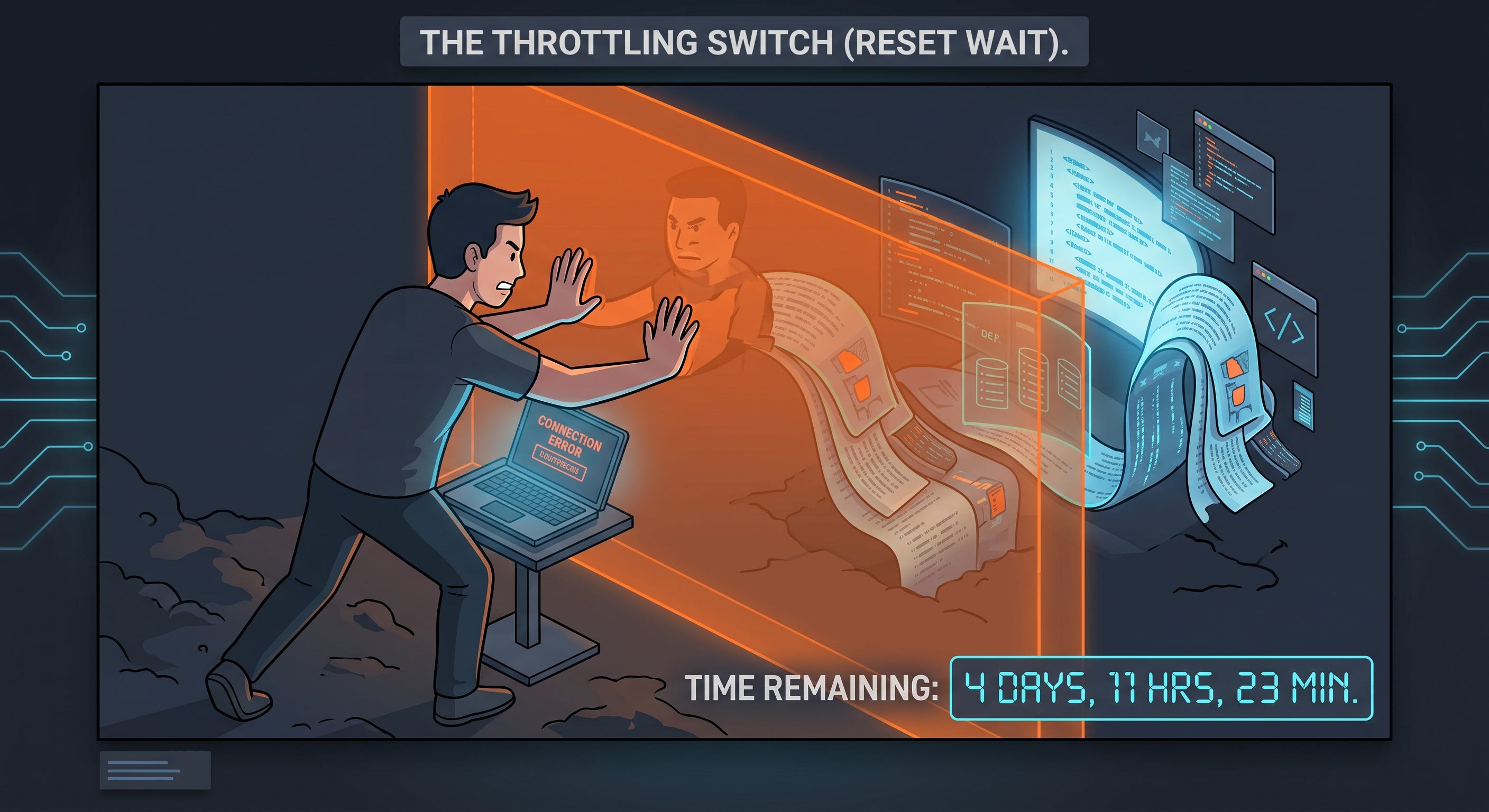
When a limit appears during a deployment, presentation build, or client deadline, work stops. The user cannot tell if the right response is to:
Wait for a reset
Buy more credits
Reduce the scope
Change models
Break the request into smaller tasks
Investigate a possible platform problem
I experienced similar friction while using Canva’s AI features to refine an investor presentation. During the beta period, the workflow felt seamless. Later, repeated limit notices forced five-minute cooldowns in the middle of editing. Five minutes sounds minor. During focused work on an investor deck, it breaks concentration and adds uncertainty. The issue is not that a limit exists. The issue is that the product gives users little help anticipating or managing it.
A Percentage Is Not a Usage Report
Traditional cloud platforms give businesses detailed information about consumption and cost. Consumer-facing AI products often provide a remaining percentage, a warning, or a reset date.
That is the same accountability gap created when a mobile provider promotes “unlimited” service but places the usable high-speed allowance in the plan details.
In each case, the headline describes abundance. The operating reality depends on a threshold.
A professional user should be able to distinguish between:
A large task that legitimately consumed substantial computing capacity
Repeated background file reads
Automated reviews or retries
Peak-demand throttling
A platform error
A temporary restriction
A permanent plan limit
In June 2026, OpenAI acknowledged that internal Codex behavior, including excess retries and background activity, had caused some users to consume their limits faster than intended. The company deployed fixes and reset affected usage caps, according to Business Insider. Without task-level reporting, users cannot identify that type of problem themselves.
Credit Packs Do Not Fix the Visibility Gap
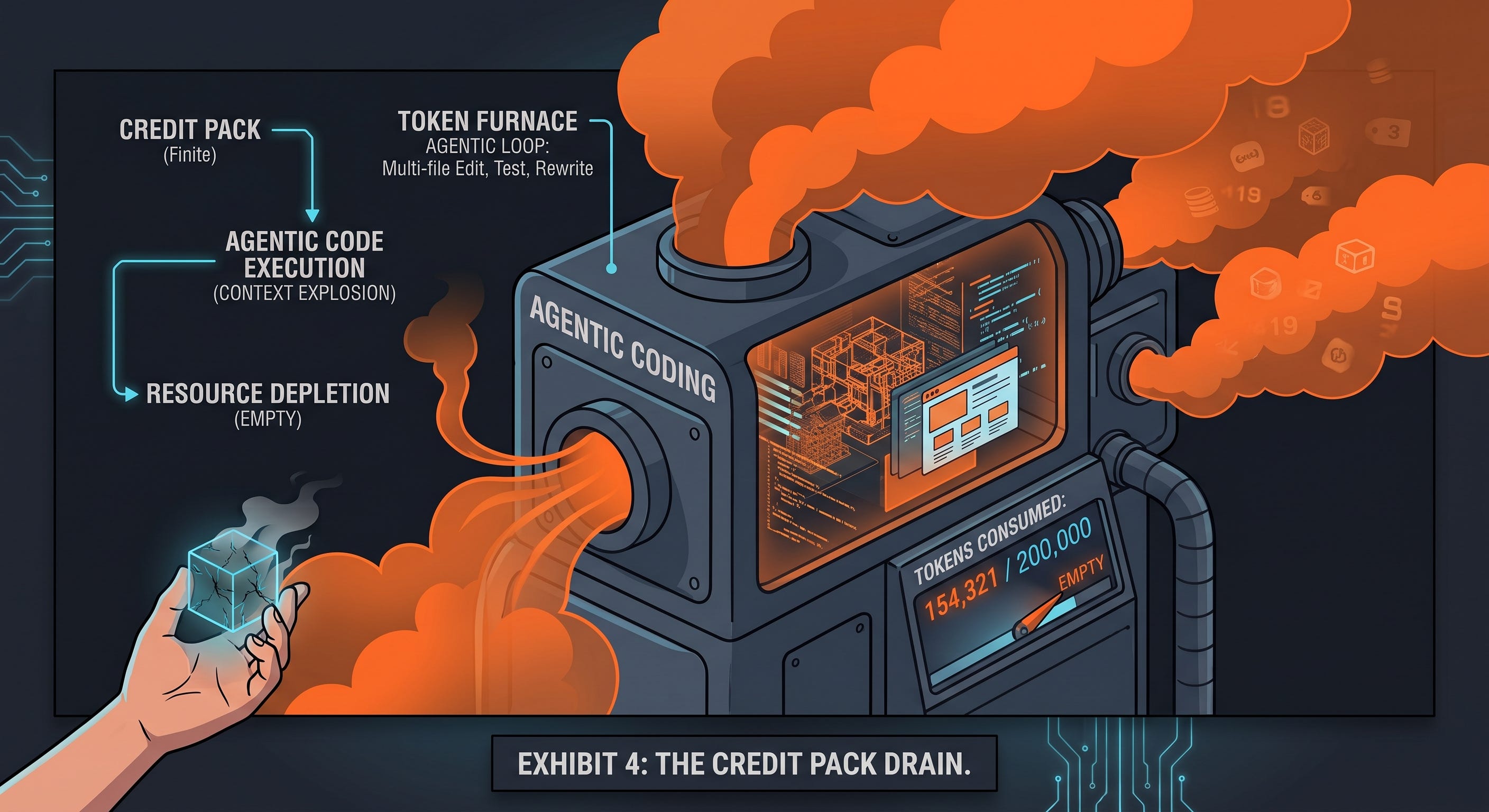
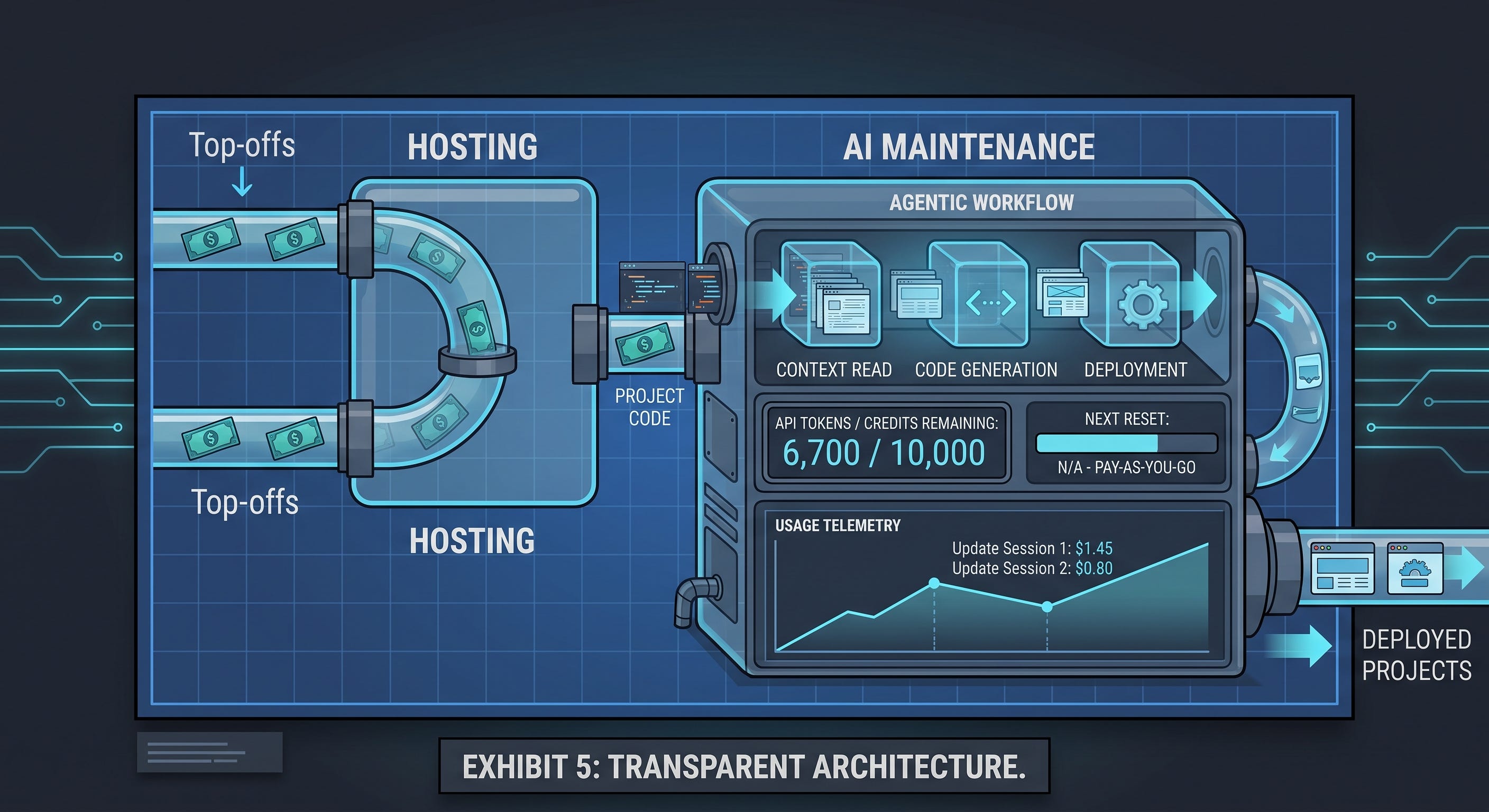
Buying additional credits can restore access. It does not create predictability. Agentic workflows may inspect large parts of a project before making a small change. Users rarely see how much capacity went toward:
Reading context
Generating code
Running tests
Reviewing output
Correcting failures
Retrying background actions
The supplemental purchase can disappear almost as unexpectedly as the original allowance.
This makes it difficult to estimate the real cost of maintaining a website, producing client work, or using AI in a repeatable business process. For consultants and agencies working under fixed fees, unpredictable AI expenses reduce margins and complicate pricing.
The Optimum experience follows the same pattern. Buying more data or upgrading to Unlimited Max may restore speed. It doesn't close the gap between the original promise and the customer’s understanding of the service.
The Marketing Accountability Standard
Business-grade products should provide business-grade metering. Customers should not have to learn a product's real limits by watching it slow down or stop during important work. Marketing leaders, agencies, and professional users should ask technology vendors for four things:
Plain-language limits
State the meaningful limit in the main offer. Do not rely on terms such as “unlimited” when speed, quality, capacity, or access changes after a threshold.
Current usage reporting
Show remaining capacity, the unit being measured, recent consumption, and the reset schedule.
Task-level cost visibility
Let users see what a coding session, presentation build, background agent, or other multi-step workflow consumed.
Warnings customers can act on
Give users enough notice to reduce scope, change their workflow, purchase capacity, or move important work before service declines.
These standards do not restrict innovation. They make the product easier to trust, budget, and use.
OpenAI gave me the capability to build at a speed I could not have reached alone. But once a platform becomes part of a company’s operating infrastructure, raw capability is no longer enough.
The same applies to telecommunications, cloud software, and every subscription sold with the promise of abundant access.
“Unlimited” should not mean unlimited until the customer needs it most.
Power earns adoption. Transparency earns trust.
Stay Current on Marketing Accountability
AI infrastructure changes quickly. Accountability needs to keep pace. Subscribe to the Marketing Accountability Council for ongoing analysis of AI metering, martech procurement, vendor practices, and the standards businesses should demand from their technology partners.