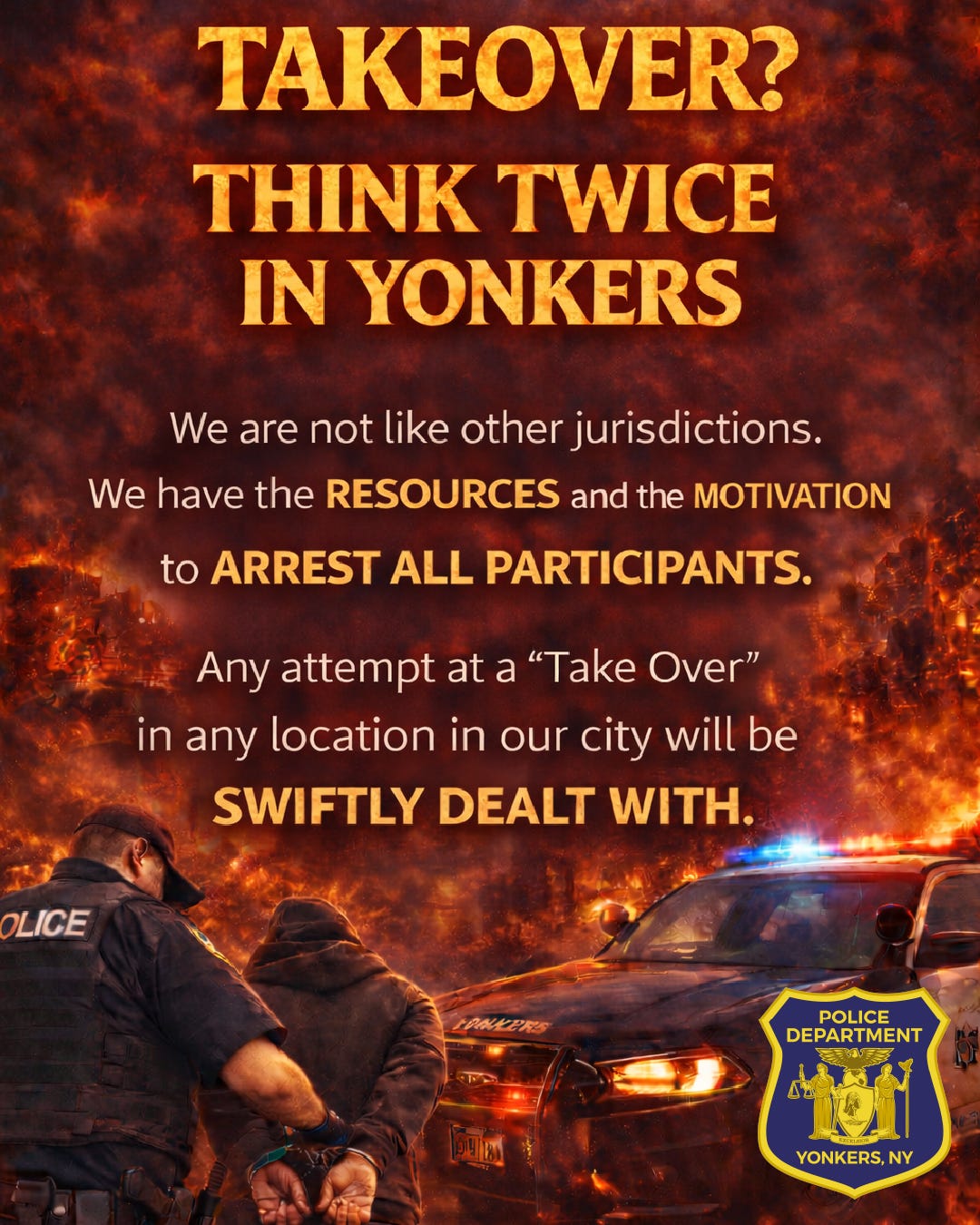
Research shows that emotionally charged content, especially outrage, spreads faster and farther on social platforms. That is why bored kids who cannot gain notoriety by being calm and innocent plan a takeover. A takeover is when teens activate through social media, surge into public space, create chaos, capture it on phones, and get wall-to-wall coverage within hours. We have seen several of these takeovers in the NYC and Westchester area this week, and several more are planned.

Across the U.S., similar incidents have followed a recognizable pattern. Local authorities in cities from Chicago to Los Angeles to New York suburbs have reported that events are coordinated through Snapchat, Instagram, TikTok, and group messaging apps, often with location drops shared hours before the gathering.
The promotion language often resembles event marketing:
“Pull up.”
“Don’t miss it.”
Countdown-style posts.
Location is revealed close to the event time.
The structure mirrors what marketing researchers call social proof dynamics, in which participation accelerates when others appear to be participating. Psychologist Robert Cialdini’s foundational work on influence demonstrates how perceived group momentum dramatically increases compliance and attendance (Cialdini, Influence, 1984). This is not random mischief. It is digitally accelerated herd behavior.
Calm behavior does not trend, but disruption does. When a takeover generates dramatic footage, it is algorithmically rewarded. The platform systems do not evaluate civic value; they measure engagement velocity. The teens organizing these events are not conducting sociological research, but they are fluent in pattern recognition. They know what gets attention.
One of the most concerning elements in recent takeovers is the apparent lack of deterrence. Arrest risk exists, and juvenile records carry consequences. Yet participation continues. Adolescents are neurologically more sensitive to peer approval and reward stimuli. The prefrontal cortex (responsible for impulse control and long-term consequence evaluation) continues developing into the mid-20s (Steinberg, Annual Review of Psychology, 2013).
When young people grow up amid declining trust in government, media, and institutions, the perceived legitimacy of long-term consequences can weaken. If systems feel distant or unresponsive, the emotional weight of violating them may diminish. This does not excuse destructive behavior. But it does shift the psychological landscape.
We live in a culture where:
Outrage spreads faster than restraint.
Controversy drives engagement.
Attention is monetized.
Visibility equals relevance.
Teens did not invent that system, but they are operating inside it. When publicity feels immediate and powerful and long-term consequences feel distant and abstract, the incentive structure tilts toward spectacle. Law enforcement can increase its presence. Schools can increase supervision. Those may reduce incidents in the short term. But unless the broader reward structure of attention changes, the underlying dynamics remain.