

When we dropped our pieces on the ticketing and travel monopolies, a clear psychological profile emerged. We proved that platforms like StubHub and Booking.com successfully weaponize our own memories—capitalizing on a customer-friendly past to mask an extractive, corporate present. But this trajectory isn’t just breaking our leisure time, our concerts, or our vacations. The exact same corporate extraction playbook has quietly expanded into the fundamental baseline of human survival: housing.
If you want to see the absolute zenith of this lifecycle—where the illusion of a free market has been replaced by cold, calculated, algorithmic collusion—you have to look at how software giants completely broke the American rental market. It is time to talk about RealPage.
Phase 1: The Useful Disrupter (The Promise of Efficiency)
Go back twenty years. For a long time, the rental housing market was messy, localized, and largely human. Property managers and independent landlords looked at physical newspaper classifieds, called the complex down the street to see what they were charging, or manually dropped prices if an apartment sat empty for too long, because a vacant unit meant losing money.
Then came the “prop-tech” revolution. RealPage and its software suites (like YieldStar) entered the market with a compelling, modern premise: revenue management through data. The software promised to eliminate human guesswork by aggregating regional data, tracking localized supply and demand, and providing landlords with an automated dashboard to optimize occupancy rates. It was framed as a cutting-edge utility built to streamline a fractured, legacy industry.
Phase 2: The Quiet Cartel Consolidation
But just like the travel duopoly, the architecture changed entirely when a single entity amassed total control over the information highway. Through a series of aggressive corporate acquisitions, RealPage effectively swallowed its biggest competitors, establishing a near-total monopoly over the revenue management software used by corporate landlords and mega-property management firms across the United States.
Suddenly, it wasn’t just a few isolated landlords using a helpful tool. In major metropolitan areas, virtually every massive corporate apartment complex—the ones everyday people rely on for standard, multi-family housing—was quietly feeding its data into the exact same centralized brain.
The open, competitive rental market was quietly transformed into an outsourced, algorithmic monopoly:
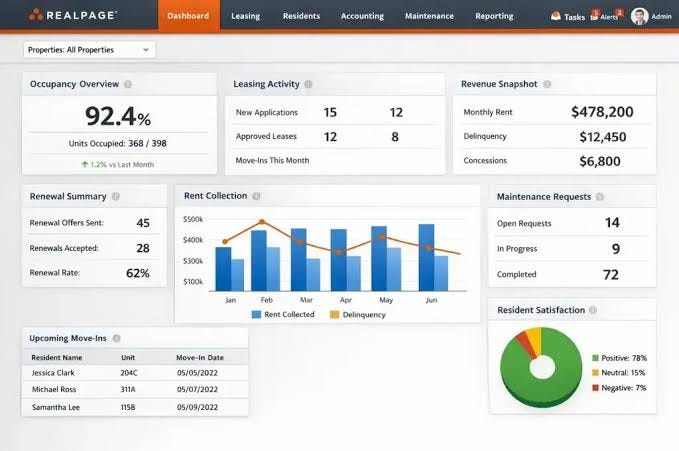
The underlying infrastructure of renting completely changed. Landlords were no longer competing against each other; they were all taking instructions from the exact same corporate tollbooth.
Phase 3: The Extractive Turn (How It Became Anti-Consumer)
Once RealPage achieved total dominance, the software’s optimization parameters shifted from helping landlords run efficiently to extracting the absolute maximum dollar value from captive human beings.
The mechanics of this algorithmic cartel are devastatingly anti-consumer, operating through two primary levers:
1. The Death of Local Price Competition
In a healthy capitalist economy, if an apartment building has too many empty units, the landlord lowers the rent to attract tenants. RealPage completely broke this feedback loop. The software explicitly discourages landlords from lowering rent. Instead, it pools non-public, highly sensitive data from competing landlords to artificially align and raise prices across entire neighborhoods simultaneously.
2. Manufactured Scarcity (The “Withholding” Strategy)
The software found that property managers could increase total profit by intentionally leaving a percentage of their apartments vacant while keeping the remaining units priced at astronomical, supra-competitive premiums. The software literally acts as a digital referee, instructing rival landlords to collectively withhold housing supply to maintain an artificial price floor.
Phase 4: The Memory Trap (Believing a Dead Market Myth)
This brings us straight back to the psychological trap defining this entire series. Why do millions of renters continue to exhaust themselves touring five different apartment complexes, filling out endless applications, and hunting for a fair deal?
Because they believe a myth that is no longer true.
The average renter still operates under the behavioral hangover of the early 2000s. They believe they are participating in a fair, localized negotiation. They assume that if they walk away from an overpriced complex, the landlord will eventually feel the pressure of the free market and drop the price. They experience the psychological illusion of “shopping around.”
They are completely blind to the fact that the entire neighborhood’s pricing has been centralized by a single software algorithm. The “competition” is an illusion. Whether you rent from Corporate Landlord A or Property Group B, you are paying a price calculated by the exact same centralized entity.
The 2026 Reckoning: Tearing Down the Walled Garden
The good news is that the extraction cartel has finally pushed society to a cataclysmic breaking point.
Following a massive, multi-district antitrust lawsuit spearheaded by the U.S. Department of Justice and state attorneys general, the dam has officially burst. In late 2025 and extending into 2026, federal courts granted preliminary approval of an astronomical $359 million class-action settlement against RealPage and dozens of its corporate landlord co-conspirators. Just months ago, the DOJ moved to enter a final judgment that strictly limits RealPage’s ability to pool non-public data to train its models and dictate local rental pricing.
True marketing and corporate accountability mean realizing that when a business model transitions from creating wealth to purely extracting it, it ultimately destroys the fabric of the society it relies on. Tearing down the travel dashboards and ticket syndicates was just the beginning. The global trustbusters of 2026 are proving that the fight for the open web is ultimately a fight for our right to live, survive, and exit the rigged rooms entirely.
Sources & Citations
In re RealPage Inc. Rental Software Antitrust Litigation (No. II), MDL No. 3071 (M.D. Tenn., 2025-2026). Preliminary approval of $359.9 million in class-action settlements regarding algorithmic rent-fixing and artificial supply suppression.
United States et al. v. RealPage, Inc. et al. (Department of Justice Antitrust Division, Proposed Final Judgment, 2025-2026). Federal enforcement action establishing structural bans on pooling non-public, competitively sensitive landlord data for runtime algorithmic operations.