

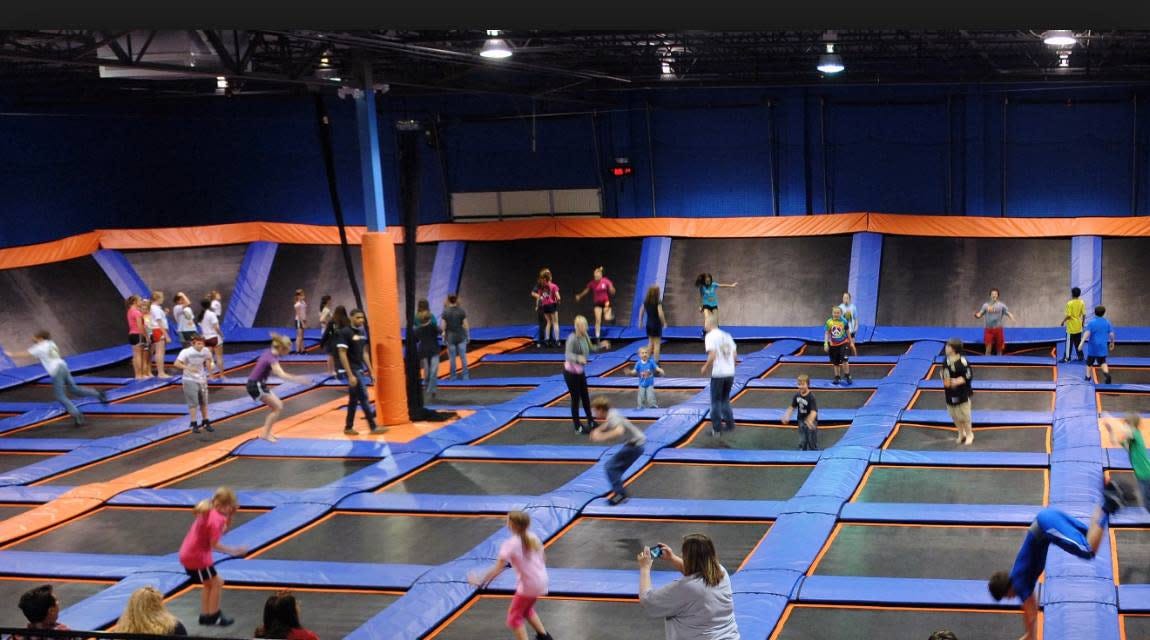
I walked into Sky Zone and immediately thought, "This building used to sell shower curtains and offered 20%-off coupons that expired but somehow didn’t." Now it sells trampoline time, tiered memberships, and $6 socks.
Sky Zone is clean, modern, and Instagrammable. The staffing? Not so much. There are about a handful of employees visible in the entire facility. There’s a VIP line and a regular line, except the VIP line is longer. Which makes sense, because real VIPs don’t become VIPs by clicking an add-on at checkout.
No one in history gained status by checking a box and paying $9.99 more.
The guy behind me asks, “Why is this place so understaffed?” I say, “Do you really want to know why?” I then said I was willing to bet this place is owned by private equity. A little research after leaving confirmed I was right. And when a place feels understaffed under private equity, it usually isn’t an accident; it’s the strategy.
PE firms buy companies with debt that the companies themselves must repay. Suddenly, the priority isn’t better service; it’s generating enough cash to service the debt and boost short-term profitability. The fastest lever isn’t innovation, it’s labor cuts. Staffing gets reduced to the minimum required to avoid lawsuits, regulatory trouble, or total collapse. If a handful of employees can scan waivers, sell socks, monitor safety, manage schedules, and keep the building from physically catching fire, then on a spreadsheet that’s “fully staffed.”
The experience may strain workers, who may burn out, and customers may notice it. But as long as revenue exceeds payroll and liability risk stays tolerable, the model is working.
Eventually, I reach the counter. $31.99 to jump. Or $38.99 for Glow Night, because purple lighting is apparently a premium product. Or maybe you’re nudged toward the $37.99/month Elite membership. Then the man behind the counter said, “You’ll need our special socks.” Six dollars for what are essentially polyester foot condoms with traction nubs. And that’s when it clicked; if the socks are required for safety, they’re part of the product. Bundling hides the margin, and unbundling keeps the headline price from looking quite as offensive.
The ticket says $31.99, but the real ticket is $37.99. The problem is your brain already agreed at $31.99, and your kid is already vibrating at trampoline frequency by the time the $6 socks enter the conversation. That’s not safety logic; that’s yield logic. Multiply six dollars across thousands of families a week, and somewhere, absolutely, there’s a “sock attachment rate” sitting on a quarterly earnings report. It was never about the socks.
Then comes the waiver. Yes, before your child can bounce on a trampoline, you have to check fourteen separate boxes. Fourteen confirmations that:
You accept the rules.
You inspected the premises.
You find it safe.
You’re healthy.
Your child is healthy.
You haven’t been near anyone sick.
You accept the risk of infectious disease.
You accept the risk of injury.
You accept the risk of paralysis.
You accept the risk of death.
You waive your right to sue.
You waive your child’s right to sue.
You agree to arbitration.
You agree to indemnify them even for their own negligence.
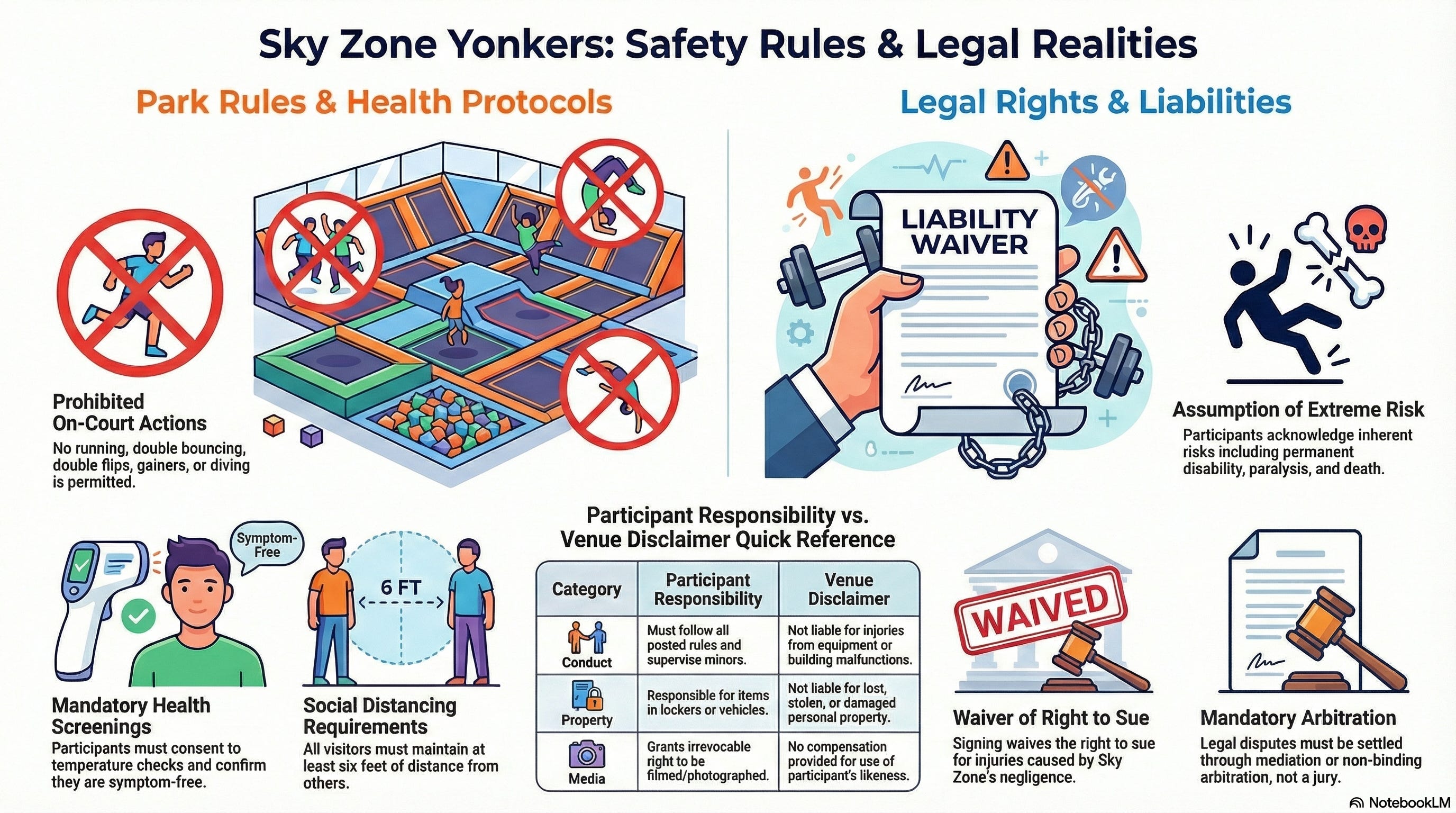

The boxes matter because every checkbox is a reinforcement loop:
“You agreed.”
“You acknowledged.”
“You confirmed.”
“You accepted.”
By the time you’re done clicking, you’re not evaluating its fairness; you’re just finishing. It creates fatigue, and fatigue creates compliance. There’s even a clause that says the agreement extends indefinitely. And then, after all of that, after the paralysis and death language and the surrender of jury trials and the indemnification clauses… They ask whether you’d like to opt in to marketing emails and SMS texts.
If your business requires acknowledgments of catastrophic harm… If it requires customers to waive the right to sue for your own negligence… If it requires parents to indemnify you and potentially pay your legal fees… At what point does protection turn into abdication?
This all made me want to throw up; Not because my daughter wasn’t happy; she was. But hovering above it all is the quiet awareness that somewhere, this entire building exists as:
Revenue per jumper
Sock attachment rate
Membership conversion percentage
Labor-to-guest ratio
Exit multiple projections
And once you realize that even childhood bounce time has been fully optimized for yield, something in your stomach flips. Because there used to be spaces that weren’t engineered.
This is not a scam; it’s worse. It’s an efficient extraction. And the fact that I guessed the ownership structure before looking it up? That’s the part that should scare everyone. And when a trampoline park feels like it’s being run by a hedge fund with grip socks? You don’t leave thinking about how high your kid bounced. You leave thinking about how high the margins probably are. And that’s not how family fun is supposed to feel.