
These Are the Breaks
Kurtis Blow and the Lost Art of Passing Culture Down

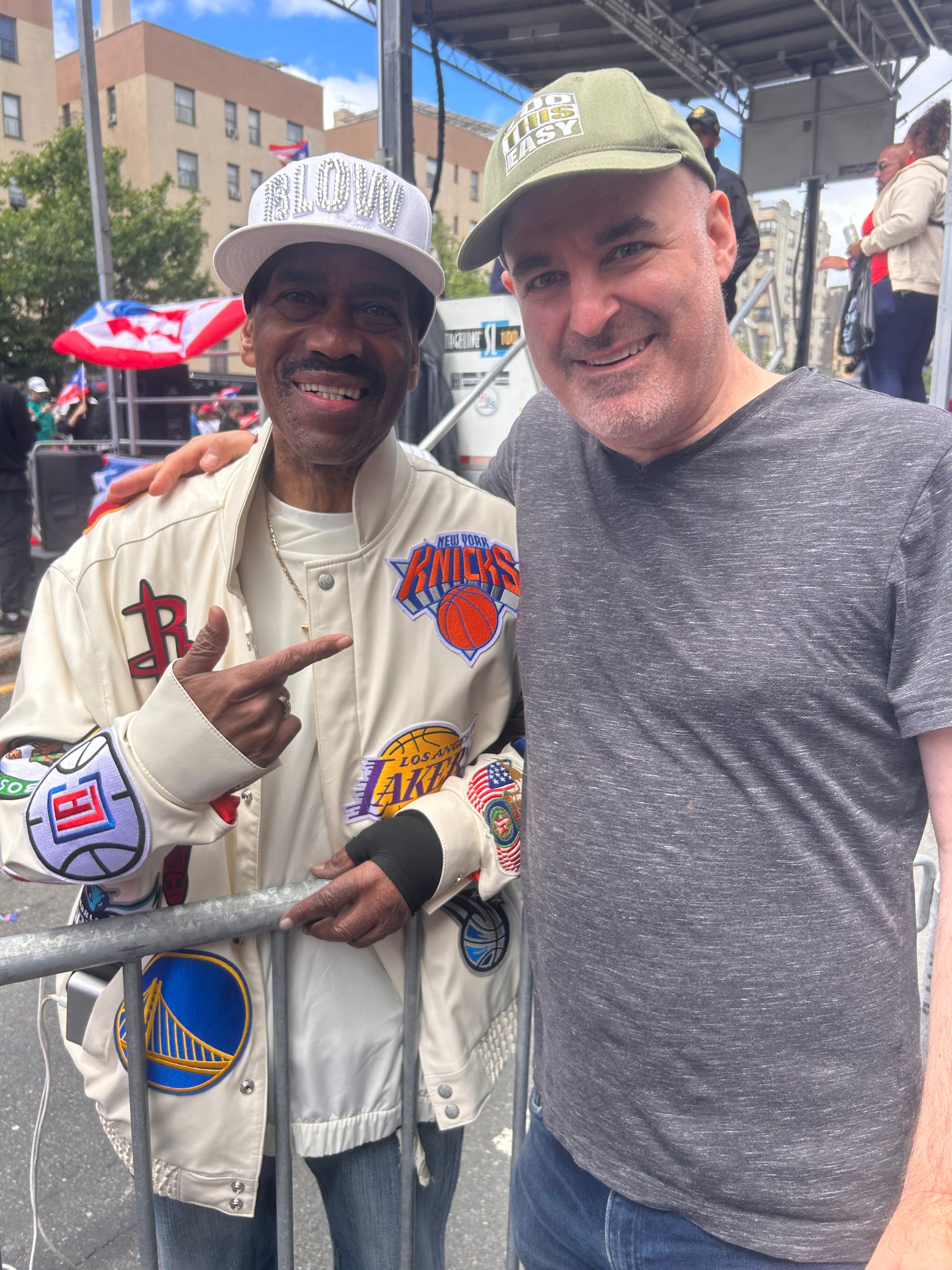
To understand the weight of seeing Kurtis Blow perform at the Bronx Puerto Rican Day Parade, you have to understand the ground he broke. Blow was one of rap’s first true global ambassadors, proving that hip-hop wasn’t a passing fad. But watching him perform made me think about how culture is passed down and what happens when it isn't.
The Paradox of Less Choice, More Breadth
As a kid, there was no “choice” in what we listened to. In the car, we were dialed into WCBS FM and Cousin Brucie as we crossed the George Washington Bridge. At home, the Bee Gees played loud enough to drown out someone knocking at the door. I simply absorbed what my dad loved, and it turns out that was the whole point.
I had fewer choices, yet I developed greater breadth. That seems counterintuitive in an age that treats personal curation as the highest form of self-expression, but algorithms don’t optimize for exposure; they optimize for engagement, giving you more of what already excites you. My dad’s car radio, with its total indifference to my preferences, was actually a more generous education than any playlist I’ve built for myself.
Those forced listening sessions shaped my taste in ways I’m still discovering. We pride ourselves on curation, yet so much of who we are was handed to us by the people closest to us, before we were old enough to push back.
The Authority That Made It Stick
Today, when I’m in my car, my daughter doesn’t sit in quiet acceptance of my favorite tracks. She immediately asks me to play her music, and I sometimes comply — which is another story for another day. I would have never dreamed of making such a demand growing up, yet in retrospect I wouldn’t have had it any other way.
But I’ve started to think the mechanism wasn’t just exposure — it was authority. My dad played what he loved without apology or explanation, and I absorbed his taste partly out of respect for him. There was a weight to his choices that made them mean something.
The internet has dissolved that structure. Online, no single voice carries inherited authority; everything competes on equal footing, which sounds democratic but often just means nothing sticks. A pioneer like Kurtis Blow walks onstage carrying decades of cultural gravity, and a stranger in a comment section can dismiss it with a single word — not because they’ve weighed it and found it wanting, but because the platform makes dismissal effortless and costless.
Two Platforms, Two Different Silences
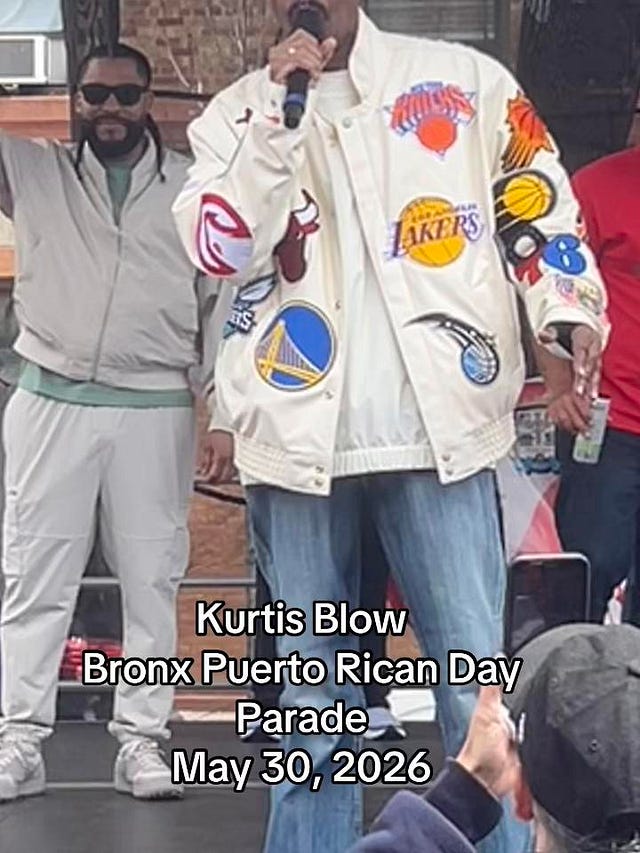
I posted a video of Blow’s performance on TikTok, and the comments said it all. On one side, you had people showing pure love —
“He is a Hip Hop Pioneer,”
“This is the Dude who started some of y’all Role Models,”
fire emojis stacked on fire emojis.
On the other, you had
“This is so corny, hip hop is dead.”
“It sounds bad…we know he a pioneer…this mess sounds terrible.”
What struck me wasn’t the disagreement itself; it was how fast it curdled. Someone pushed back with “so keep scrolling, obviously the people in attendance are enjoying themselves,” and within minutes it devolved into “you internet ppl be so miserable.” Nobody was wrong exactly, but nobody was really listening either. The comment section didn’t become a conversation; it became a series of people performing their position for an audience.
 Tiktok failed to load.
Enable 3rd party cookies or use another browser
I posted the exact same footage to Instagram. Barely a word. No fire emojis, no “corny,” no debate; just silence. It would be tempting to call that the healthier response, but I’m not sure it is. Passivity isn’t appreciation. It might just be indifference. Neither platform produced what you’d actually call engagement in any meaningful sense. TikTok performed outrage; Instagram performed nothing at all.
What was absent from both instagram and Tiktok the willingness to sit with something long enough to let it mean something.
What “The Breaks” Was Actually About
What gets lost in all of this is the substance of what Kurtis Blow was even doing. He’s working a clever triple entendre; playing simultaneously with “breaks” as musical breaks, “brakes” as in a car losing control, and the concept of life’s relentless ups and downs. Lyrically, he was touching on the hard realities of urban life: poverty, joblessness, the daily grind of getting by in a city that wasn’t built to catch you when you fell.
That specificity is exactly what a binary comment section cannot hold. You either worship it or you dismiss it. The space in between, where you might say I don’t live that reality, but I can hear the truth in it — that space has largely collapsed online. It’s a far cry from the slow, patient process by which I learned to appreciate music I never would have chosen myself, recognizing it as a piece of a larger cultural puzzle I was still assembling.
We Rebuild It Offline
So how do we reclaim that patience, that sense of shared experience? We rebuild it the same way it was built in the first place; offline, in cars and kitchens, through the accumulated small acts of one person sharing what they love with another.
Shared exposure still happens. It has just become opt-in. Someone has to choose to bring other people’s music into a space, to hold the aux cord without apologizing for it, to let their kids absorb something they didn’t ask for and trust that it will mean something eventually. My dad did this without thinking twice. Now it requires intention.
That might be the most radical act available to us in this moment; not a new platform feature, not an algorithmic fix, but a parent who just plays what they love and doesn’t change the station.