

Zeitgeist is my favorite German word, because it embodies a concept not otherwise easily defined.
Basically, the zeitgeist is a river of memories through which we all paddle.
A collection of shared feelings, ideas, and experiences that define a certain time.
People say the zeitgeist is dead now, that the river has run dry, because we no longer have shared memories, feelings, ideas, or experiences.
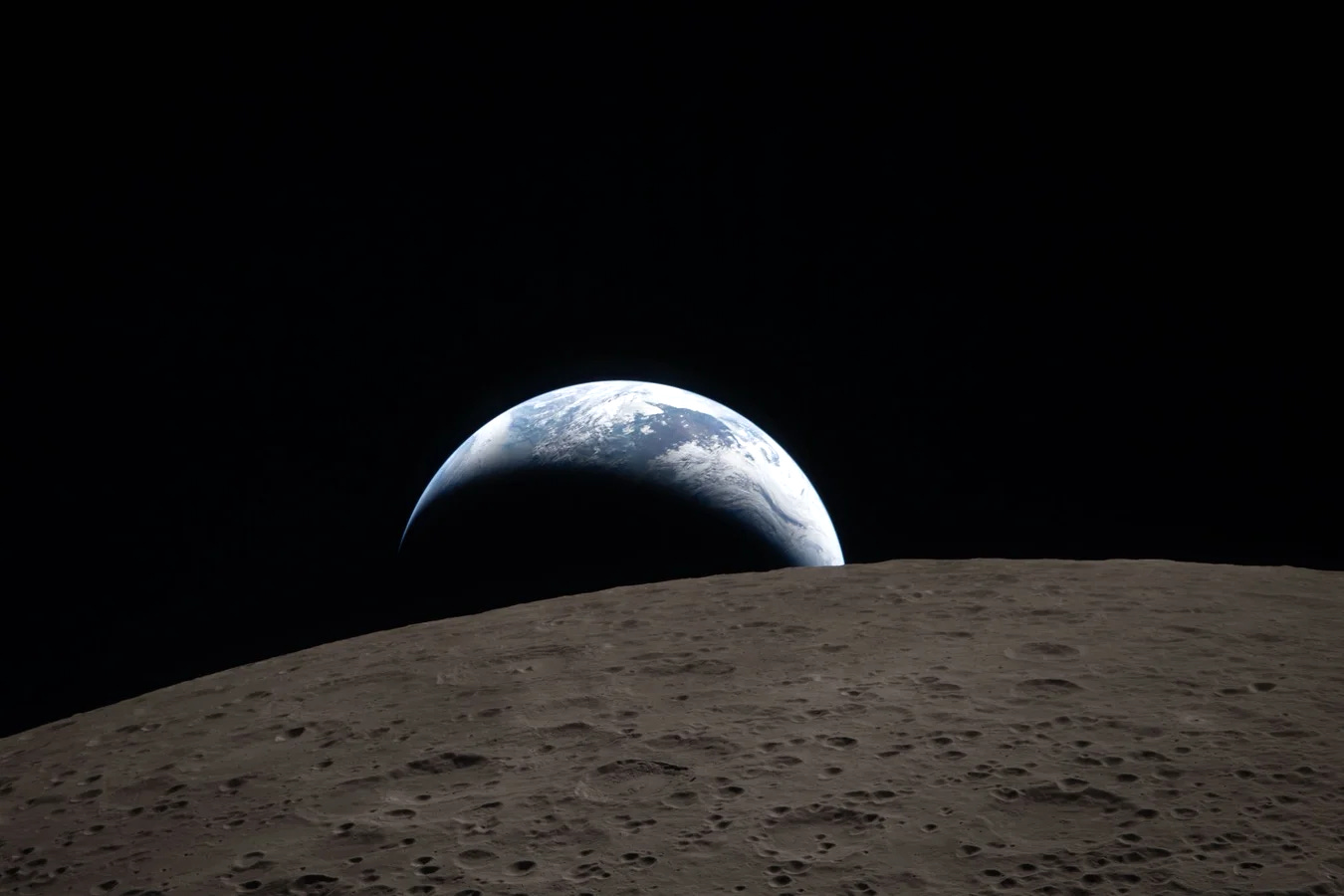
But the Artemis mission, and to a lesser degree the success of Project Hail Mary, demonstrate the zeitgeist can still flow.
Things can still resonate and bring us together as nations, cultures, and as a world.
So why don’t more things do this nowadays?
People blame media and algorithmic fragmentation, but this is too neat and facile.
Change is always more complicated.
Sure, truth is now increasingly considered opinion, and standards no longer exist, with both certainly making real-world events feel increasingly weightless, but the Artemis mission brought another big cause of the zeitgeist drought into focus.
Which is that lately, there’s been a distinct lack of anything new in our culture worth coming together for.
In other words, we’ve been starved of zeitgeist-worthy stimuli.
How Artemis Replenished Us
Weeks ago, people like me were deriding the notion of Americans planning to circle the moon again, something we were already doing back when Star Trek: TOS was on the air.
But then Artemis launched and everything changed.
The world collectively held its breath and started paying attention.
We wanted Artemis to make it. We rooted for them.
And the photos they sent back seized our imagination.
Some of us were sad that these sterile digital images looked less romantic than the dreamlike film images from space that preceded them, but still, we couldn’t look away.
We were reclaiming a piece of our soul.
Humanity longs for the transcendent.
Things bigger than us. Grander than us.
Things that elevate us above our drab little lives.
Things that make us feel part of something greater.
Things that stun us or inspire awe.
That’s zeitgeist.
And it illuminates what’s been missing from the conversation surrounding its absence.
Zeitgeist is not something that happens just because we collectively experience something.
Avatar would have left a cultural mark if it were.
Zeitgeist is earned.
Unworthy things may sneak in occasionally, like the Macarena, but for the most part, the zeitgeist is reserved for things worthy of uniting us, whether great or terrible.
This is why a lot of recent media, content, and cultural events have failed to make a dent in our collective psyche.
As our primary screens have gotten smaller, what we see, hear, and consume seem to have gotten smaller, too.
Things seem flatter. Pettier. Uglier. Dumber.
More drab. More derivative. More vacuous.
More calculated. More tribal. More evident of an agenda.
More a matter of profit or button-pushing or special interest or self-interest.
Less a matter of appealing to our shared humanity, or the need to express it, or of care or effort.
And this cannot solely be attributed to our gatekeepers and overlords. The decline is everywhere.
We just don’t seem to be trying anymore.
Doing something well for its own sake is no longer admired.
We worship grift now.
Everything we do must be a hustle, an angle for something else, a revenue stream, content.
People now want to be Jake Paul more than Michael Jordan.
And nothing seems to matter.
News has been flattened into noise.
Movies have been flattened into monetized IP.
Television has been flattened into content.
And music no longer defines us. It’s been flattened into background noise at the gym.
All that once mattered culturally is now a pantomime of itself; a distraction from what matters.
We’ve enshittified everything, leaving cultural progress stagnant.
With excellence no longer rewarded or wanted, and significance itself in decline, the zeitgeist is starved.
Leaving us in a dry river, alone with our own inane chatter, marketers included.
Marketers once made culture. We drove the zeitgeist.
Now our highest ambition is to chase it.
To comment on it. To profit from it.
But with the zeitgeist running at a trickle at best these days, there’s very little profit to be had.
Which provides a hint as to the way forward.
Marketers don’t have to create or tap into the zeitgeist (which is a lot harder now) to be effective, but we would do well to remember what qualifies something for being there.
Things like awe and excellence certainly help, but they’re not always sufficient.
For marketing to resonate, another vital ingredient is needed.
Television provides a convenient illustration.
And since hindsight often clarifies things, let’s look back at the ‘90s.
The TV shows that captured and defined the zeitgeist of the ‘90s are the same shows people still watch today.
Seinfeld, Friends and Sex and the City are the definitive comedies, with The X-Files the definitive drama.
Other comedies were popular back then, like Home Improvement.
And The X-Files was never actually a top-tier or prestige drama during its run, not like ER or NYPD Blue.
But those other shows were just iterations of what came before, and not tied to a particular time, while the zeitgeist shows were different.
They represented something new. And resonated because they tapped into things bigger than themselves. Things other shows hadn’t before.
Friends depicted the rootless, unstructured, eternally regressed way adults live now.
Seinfeld embodied the digressive, neurotic way modern adults think.
Sex and the City depicted the absurdity and futility of conventional relationships in a world where people have easy and plentiful access to sexual partners, as if they were a brunch buffet.
And The X-Files embodied brooding Gen X chill, flavored with the Y2K anxiety and grassy knoll paranoia that defined the first age of the Internet (and the last age of truth).
These shows made people feel seen, which is something we all need, a lot more than we need to be merely entertained.
They shined a light on the culture of the time and came to help define it.
But today’s marketers have no interest in people, or what they need, or our culture.
Marketers are too wrapped in our little bubbles for that.
We’re too busy fucking around on computers, looking at indicators, reading reports we hope will reveal the zeitgeist.
But we have no interest in getting wet. And we have no interest in making waves.
We want to sit on the shore making pinky-in-the-air cultural commentary.
We care nothing for excellence or awe.
We care nothing for people.
And we lack the commitment to earn their attention.
All this needs to change.
I’m not sure how we’re going to do it, but if Artemis can recapture what we once had, so can we.

Very profound analysis, Jason, thank you for sharing!
It is also because culture has become 'massively parallel in nature' and we care about different things. Massively parallel because search and the platform algorithm can help you find your people (parasocially at least). Caring about different things - artists are less important if you pick your play by playlists rather than building your own (rather like an algorithmic radio DJ).