

After losing his son to a drug deal facilitated through Snapchat, Aaron Ping launched the Superhuman podcast to investigate failures of accountability. He sits down with the Marketing Accountability Council to talk about the podcast and examine the advertising practices, corporate incentives, and regulatory gaps that enable social media harms. The big question: Why have marketing professionals, whose work helps sustain these platforms, been largely absent from conversations about the harms they enable?
Aaron Ping is an event producer, a videographer, an audio engineer — someone whose professional life was built around making other people’s stories look and sound good. He had no plans to become an investigative podcaster. Then his son Avery died, right before Christmas 2024, and the systems Aaron had trusted to respond — law enforcement, prosecutors, the courts, the news — either couldn’t or wouldn’t tell the full truth of what happened to his son.
So he built a channel to do it himself.
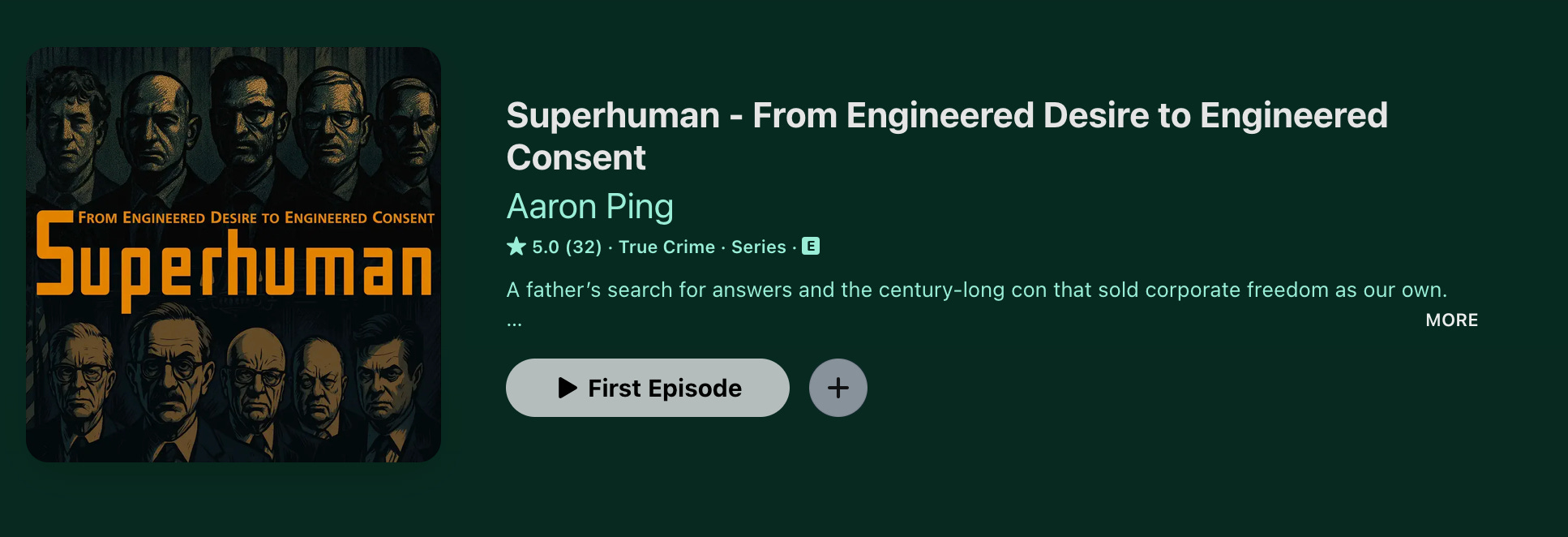
Superhuman — Aaron’s podcast, now in its second season — is not a grief narrative. It’s an investigation into how corporations like Snap, Meta, and Amazon have accumulated legal rights without accountability, and how the architecture of digital platforms has made harm not just possible but, in some cases, structurally inevitable.
In a recent conversation with the Marketing Accountability Council, Aaron laid out what he’s learned, and a lively back-and-forth followed — one that kept arriving at the same uncomfortable place: this industry built a lot of the infrastructure these harms travel on.
The System Didn’t Fail. It Performed Exactly as Designed.
Aaron held off on giving social media to Avery for years. One-hour screen time limits. Conversations about Jonathan Haidt’s research on adolescent anxiety and phone use. A deliberate choice, from a father who had himself been raised without screens. Avery didn’t get Snapchat until he was 15. Everything that followed happened in about a year.

What Aaron didn’t know — what most parents don’t know — is that Snapchat functions, in practice, as a distribution network for drug sales.
“It’s literally set up like DoorDash,” Aaron said, “with a lot of features that are set up for drug deals.” Someone he spoke with recently described it as the LinkedIn for drug dealers: a platform where suppliers find each other, coordinate large shipments, and market directly to their target demographic. In Avery’s case, that target demographic was middle school and high school kids. The man who sold to Avery was a 34-year-old convicted felon.
Three days after Avery died, Aaron went to the prosecutor expecting accountability. What he found instead was an institution calibrated for easy outcomes. “Young prosecutors looking for the easy cases, the easy outs, the easy plea deals.” There was no mechanism, in most states, to even acknowledge what had happened. Only two states in the country — Pennsylvania and Georgia — have laws that create a charge when someone uses a digital device to facilitate a felony. Everywhere else, the law looks at one moment in time, one transaction, and stops there.
“You will not get justice,” Aaron said. “You will not.”
The prosecutor’s lack of interest in public accountability was, in the end, what forced Aaron’s hand. “That really was actually the deciding factor — I’m gonna try to build the channel. I’m gonna try to get awareness around this so that when this court case happens, hopefully I’ll have a following, I’ll be able to put this out, and people will see what is reality.”
The Regulatory Vacuum — and Who Benefits From It
Moni Oloyede, one of the MAC council members, pushed Aaron on the structural side of the question. The FCC exists for television. There’s a body that sets rules, enforces standards, holds broadcasters accountable. The internet has never had an equivalent — and she wanted Aaron to name why.
“In television you have the FCC,” Moni said. “In internet you have nothing. There’s no government commission that regulates a damn thing — by design.”
Aaron agreed. And he noted that the problem has compounded. The regulatory vacuum that existed in 2006 when Facebook opened to the public has, in the years since, been actively reinforced — through lobbying, through campaign finance, and now through a political alignment between major tech platforms and the current administration.
“It is in bed on top of bed,” Moni said, “an incestuous mess.” She pressed Aaron directly on the lobbying dynamic: even when clearly beneficial legislation surfaces — child safety bills that seem like no-brainers — it stalls or gets quietly gutted.
Aaron’s answer was specific. “Their new playbook in the lobbying world is to come up with bills that have child safety in the name and tech protections in the design.” Bills written to look like accountability but engineered, in their fine print, to foreclose the exact liabilities the industry most wants to avoid. “You have to be a real expert — way more of an expert than me, in the legal field — to actually be able to see those loopholes. And there’s not a lot of people, legislators included, that can even really dissect that.”
The larger shift Aaron is tracking is the AI rebrand. Snap and Meta built their legal immunity on being platforms — neutral pipes — under Section 230, passed in 1996. That framing is crumbling under public scrutiny. So the industry is moving to the next available free pass.
“A lot of these companies that are relying on Section 230 as their scapegoat are starting to rebrand as AI. Because now that’s the next thing to get the free pass to do whatever you want.” The promise being made now — that AI will make everyone wealthy, that this is a tide that lifts all boats — rhymes, Aaron noted, with every prior wave of deregulatory enthusiasm. “As Jon Stewart recently said, they’re selling us capitalism to give socialism, ‘cause everyone’s gonna be rich because of AI. That’s the promise.” And just like the internet before it, the playbook is: move fast, get normalized, fight accountability before it arrives. The immunity clock resets.
“There’s no advocates in the room,” Aaron said of the AI policy conversations happening now. “That’s the rebrand — that’s the next thing to get a free pass to do whatever you want.”
Advertising Is the Base Layer
Aaron is careful about where he places the origin of platform harm. Not in Silicon Valley. Not in 2006. Further back.
“I do believe that, for so many reasons, the base layer — the advertising — is the base layer of the issue in our country.”
He traces it to the shift after World War I, when American economic policy moved from a needs-based model to a desires-based one. More manufacturing capacity than demand required a new kind of marketing — one that didn’t sell products to people who needed them, but manufactured the desire first.
Edward Bernays, Freud’s nephew, provided the methodology: sell people their unconscious desires. The cigarette industry was an early client. The tactics have been refined ever since.
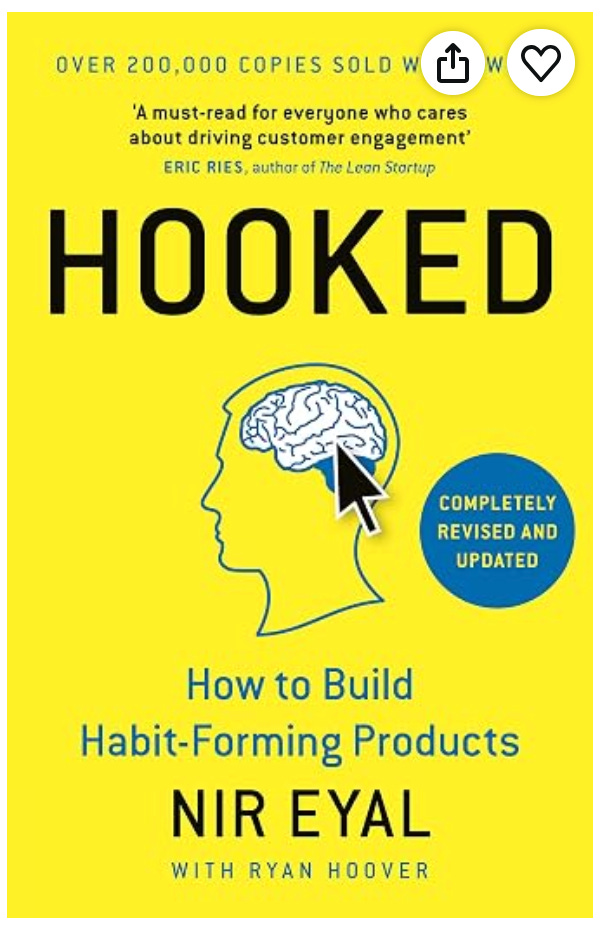
MAC founder, Jay Madel, who had been tracking the Bernays thread through the whole conversation, named it before Aaron could: the torch of freedom rally, the manufactured desire that made cigarettes a symbol of women’s liberation, the four-step system of trigger, action, reward, investment. Aaron confirmed the parallel. “The same exact thing is now being applied to social media” — through the hook model, through Nir Eyal’s work on habit formation, through BF Skinner’s variable reward schedules embedded in every notification, every scroll, every algorithmically timed content hit.
Moni noted the blind spot that behavioral psychology creates in the marketing community itself. “If you post something like a BF Skinner breakdown — ‘here’s the psychology behind this’ — crickets. No one engages. They don’t care.” The industry uses the psychology. It just doesn’t want to look at it directly.
For Lori Schott’s daughter, that refusal to look exacted a heavy cost.

Lori is a mother Aaron interviewed for the second episode of Superhuman — her daughter grew up in a town of 50 people in rural Colorado, on a ranch, with horses and animals and a life mostly kept from screens. She got an Instagram account. Her friends and family started seeing her spiral.
“Her friends are the ads that are coming in selling her beauty fixes and shame-based marketing to break down her self-worth and then sell her a fix,” Aaron said. “That is an old tactic. Highly effective.”
Aaron is not abstracting here or just talking about fringe and problematic usage. He is describing a mechanism — shame as a product feature, self-worth erosion as a conversion tool — operating on a teenager in a town where no one was watching. “An environment that is hypnotic by design.” The tobacco industry did something similar for decades. The difference is that a cigarette couldn’t target you individually, adjust its approach based on your psychological state in real time, or serve you content at the exact moment your defenses were lowest. The algorithm can.
Aaron points to Dove and a handful of other brands that have built counter-messaging around self-worth — campaigns built on “you are good enough” rather than the deficit model that drives most beauty marketing. He thinks it works.
“I think it deserves a lot more scrutiny against companies that are using those tactics in an environment that is hypnotic by design.” The contrast he’s drawing: the tactics are available to anyone. The question is who’s deploying them and toward what end.
What Incentive Is Bigger Than Money?
The conversation turned, as MAC conversations often do, to the question of change. Jessica Smiley, another MAC council member, put it directly: “What are the incentives? What would change any of these companies? What incentive is bigger than money?”
Her answer to her own question: “I think it’s shame — unless shame influences money.” She pointed to the athlete sponsorship model — someone does something wrong, loses their deals, goes on a PR tour to rebuild. Shame, in that case, works because shame becomes a financial event. And she drew a parallel that Aaron responded to immediately: the Truth campaign in the early 2000s, which went after tobacco using the same psychological playbook the industry had used for decades — just pointed in the opposite direction.
“They did the same thing Ed Bernays did,” Jess said. “I think there’s an opportunity.”
Aaron agreed, and he took it further. “It comes down to psychology. It’s been psychology in advertising for a long time.” The variable reward schedules, the fractional attention techniques — bringing someone up, bringing them down, serving them an ad at the bottom of the cycle — these are documented, measurable, reproducible mechanisms.

Aaron referenced Chase Hughes, a behavioral influence researcher who has written about the hypnotic effect of emotionally cycling content. “I don’t know that somebody’s behind an algorithm making this choice,” Aaron said. “But there’s a hypnotic effect — and when you have a predictive algorithm that is studying each individual, the practice becomes something that needs to be looked at.”
His prescription followed directly from the diagnosis: “If you’re designing things to exploit people’s psychology, it should be the opposite — you should be required to have an educational aspect to it so that people can have the opportunity to wake up.”
Moni came back to the counter-narrative question from a different angle. The Truth campaign and D.A.R.E. worked — when they worked — because they created a counter-narrative that traveled through the same cultural channels as the harm they were addressing. “These companies know that marketing is powerful. That’s why they spend so much time on these platforms — because they’re just marketing.” The counter to that, Moni argued, is not primarily policy. Policy gets buried, rewritten, lobbied into irrelevance. “There needs to be a counter-narrative of how harmful these platforms are. We’re story-driven people. That’s how our brains work.”
Why the Industry Stays Quiet
Aaron doesn’t think the marketing industry is full of people who want children to be harmed. He’s thought about this carefully, and his answer is more uncomfortable than malice.
“Incentives,” he echoed Jessica’s earlier comment. “What are the incentives?”
Professionally, Aaron works with a small company he’s known since 2011. They know him. They know his story. They know Avery. And yet, they continue to pay for social media ads that generate little engagement and fewer sales, because they cannot bring themselves to leave.
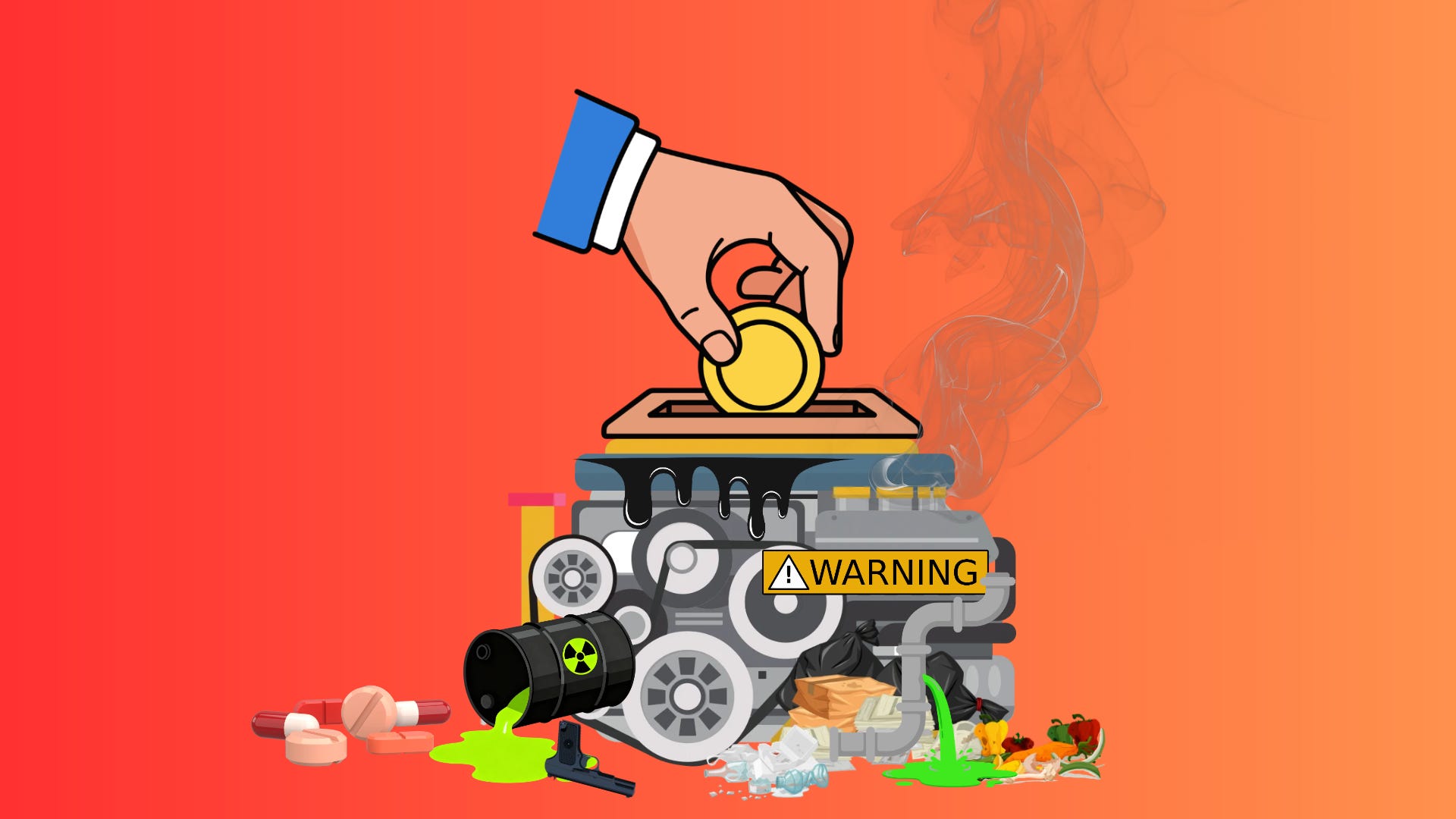
“I’ve tried to say, ‘You’re barely getting any sales on social media. Why don’t you just take a stance and say, we are not marketing on social media?’ I believe that’s going to be a more powerful message for you. But they won’t do it. They’re just locked into this belief that you have to be on social media if you want to grow.”
Aaron names another mechanism while he’s at it: “I’m convinced that ‘your ad isn’t gonna work if it’s longer than 15 seconds’ — I think that’s all manipulated. It’s all fake news to get people to put shorter content on so people are scrolling faster.”
The platforms set the rules for what constitutes effective marketing. Marketers comply. The platforms profit from the compliance. The loop closes.
MAC co-founder and host, Jake Sanders, pushed Aaron on this directly: what would Edward Bernays use to change the industry itself? Aaron’s answer was immediate. “Money and fear.” Not moral awakening. Not awareness campaigns. The lever that moves behavior is the same one that built the system.
That’s not cynicism. That’s diagnosis. And it leaves the MAC community with a specific question: what would it take for accountability to become a financial event for the platforms — in the way that losing a sponsorship is a financial event for an athlete?
No Red, No Blue
Aaron is building season two of Superhuman the way he built season one: by going to families, recording their stories at length, refusing the sound-bite format that the news applies to these cases. “Even when the news covers these stories, they’re little sound bites and snippets — you don’t actually get the truth that the parent has lived through.”
Season two will go further. Aaron described a story he’s been working on about a mother who tracked down her son’s killer herself — after law enforcement took no action — and documented the whole thing. “You’re gonna see how she tracked this guy down. It’s a powerful episode.”
When Moni asked Aaron what his goal is — what he wants his legacy to be when he looks back on all of it — his answer was simple. “It’s truth. It’s just sharing the truth. Because no one else is really doing it effectively. Everyone has an angle they’re trying to go after. But the truth is that there’s a lot of interconnected parts, and you can’t only look at one aspect of it.”
He is not naive about the scale of what he’s up against. The companies his podcast documents have legal teams and lobbying budgets that dwarf anything a grieving father with a recording setup can assemble. But the conversation that day kept arriving at the same conclusion from every direction: the fragmentation of outrage is itself a product of the machine. “These channels are directing our anger at each other,” Aaron said. “Fragmenting it into all these different issues when it’s all literally the basis of our country — to separate corporate power from state.”
“There’s no political angle, no red, no blue,” he said. “It literally affects everybody.”
When the conversation wound down, Aaron looked around at the MAC panel and said something that was less a compliment than a transfer of responsibility.
“You guys are doing it. This is where the buck stops.”
He wasn’t talking about a campaign. He wasn’t asking for a white paper. He was naming something specific: an industry that built the infrastructure these harms travel on, that profits from the engagement the harms generate, and that has spent years treating accountability as someone else’s department.
The lawsuits are already in the courts. The internal documents are already public. Laura Marquez-Garrett at the Social Media Victims Law Center has been posting them for years — showing, in the companies’ own words, that the harms were known, studied, and weighed against the revenue. The cover wasn’t ignorance. It was structure.
Aaron’s podcast exists because that structure held, and the systems that should have broken it didn’t.
What he’s asking the marketing industry to do isn’t complicated: stop providing the revenue model that makes the structure worth defending.
Or, at minimum, stop pretending you don’t know what you’re funding.
Aaron Ping’s podcast, Superhuman, is available on all major platforms. Season two is in production.
The MAC Reality Check is a recurring conversation series hosted by the Marketing Accountability Council. Subscribe to this Substack for future installments.
Our children’s safety should matter more than platform profits. As a parent, I want answers. As a marketer, I want our industry to take responsibility for what we help fund.
Great breakdown and review Jake. It was a powerful and impactful conversation and you captured it wonderfully. We can't afford to be passive as marketers. We have a role to play here because lives are at stake. Literally.