

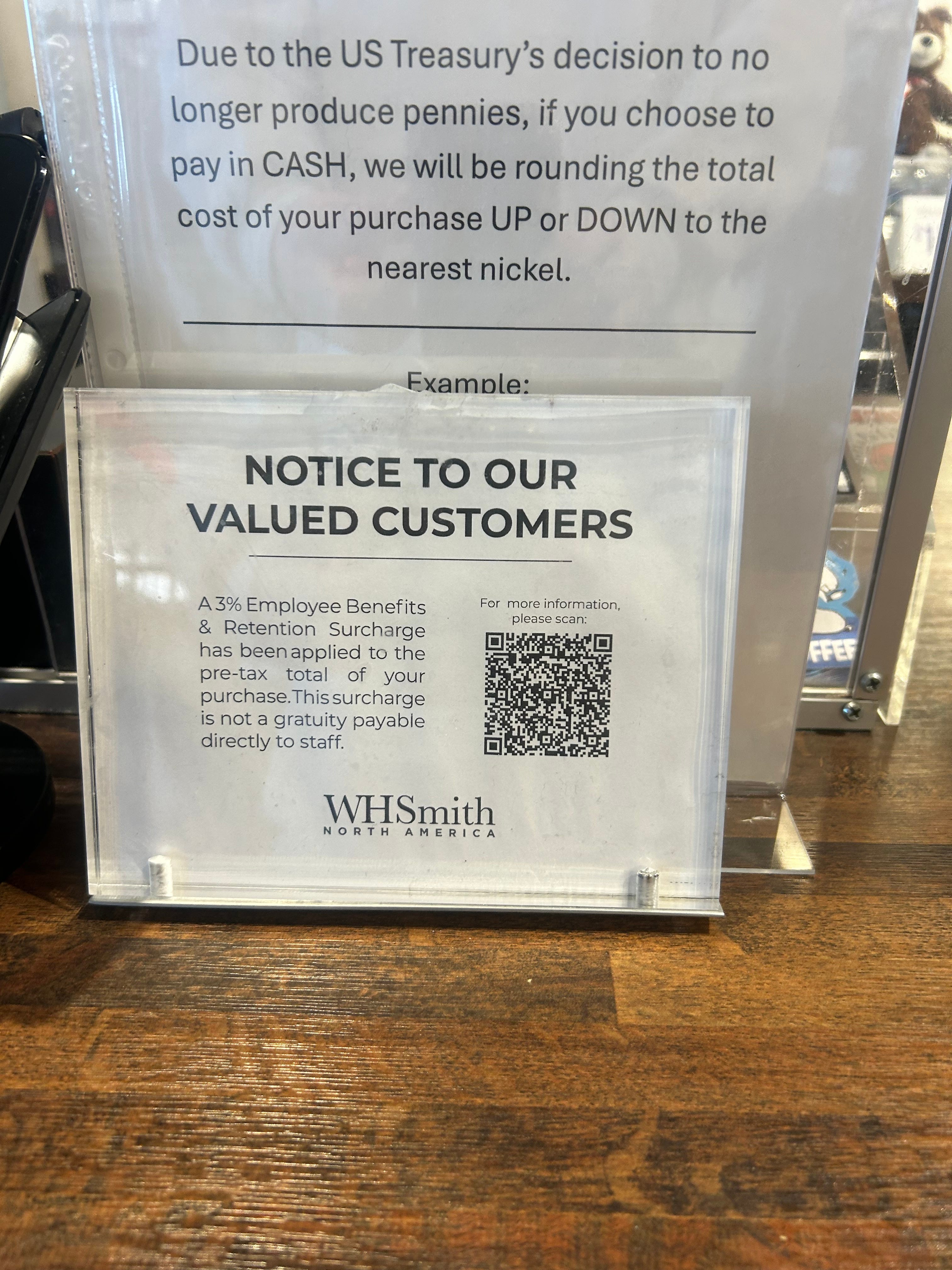
The other day I was standing at a WHSmith in the airport, buying some water. And right there at the register, sitting in a little plastic stand, are two signs that sum up the entire economy right now. The first one says: “A 3% Employee Benefits & Retention Surcharge has been applied to the pre-tax total of your purchase.” It also makes sure to add: “This surcharge is not a gratuity payable directly to staff.”
The second one says: “Due to the US Treasury’s decision to no longer produce pennies… we will be rounding the total cost of your purchase up or down to the nearest nickel.”
So just to recap:
airport vendors are adding benefit surcharges at checkout
the federal government can’t even justify producing pennies
and customers are expected to smile while their totals get rounded
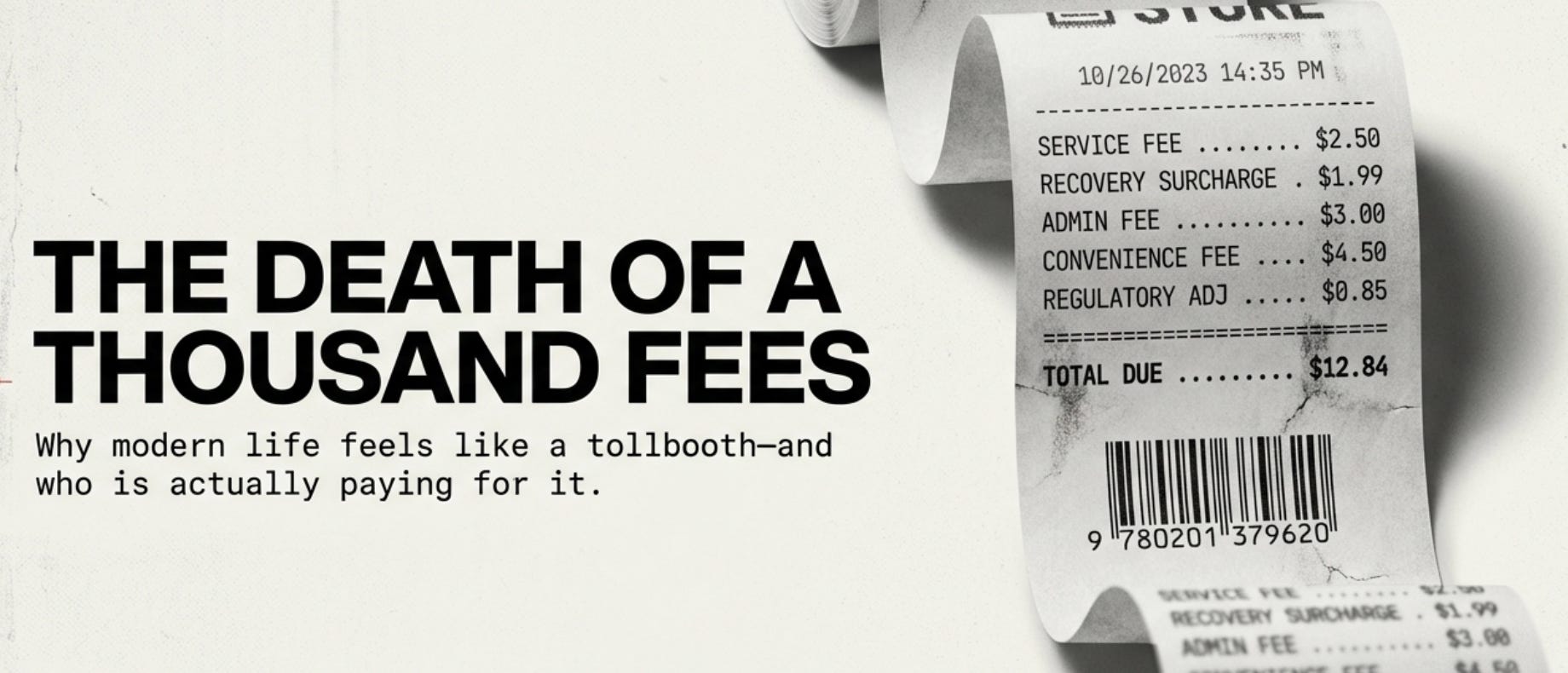
This is what I’ve been calling the death-of-a-thousand-fees economy. Not one big hit that forces a real conversation. A thousand tiny cuts that slowly make normal life feel like a tollbooth.
Governments are in a real bind, and nobody wants to admit it
Governments are not inventing fees and surcharges just for fun. The pandemic didn’t just change behavior. It blew holes in budgets. Costs went up across everything:
labor
operations
debt service
infrastructure maintenance
public systems that were already under strain
And politically, no one wants to raise taxes cleanly and take the heat. So when governments need revenue, they often do what every institution does when it’s squeezed: they start hunting for money in the margins.
That’s how you end up with:
toll increases that creep upward year after year
transit costs rising without service feeling meaningfully better
“enforcement revenue” (cameras, tickets, fines) that quietly becomes part of the budget model
fees framed as “policy,” not taxation
And you feel it every time you leave your house.
A day in New York now comes with a fee stack
This is what a normal day looks like now:
You drive.
There’s a toll.
You take the train.
The MTA costs more.
Is the infrastructure better?
Are there more trains at the times you actually need them?
Is anything cleaner, smoother, more reliable?
No.
You don’t feel improvement.
You feel management.
Then you try to park.
And the system is designed to punish you for being human.
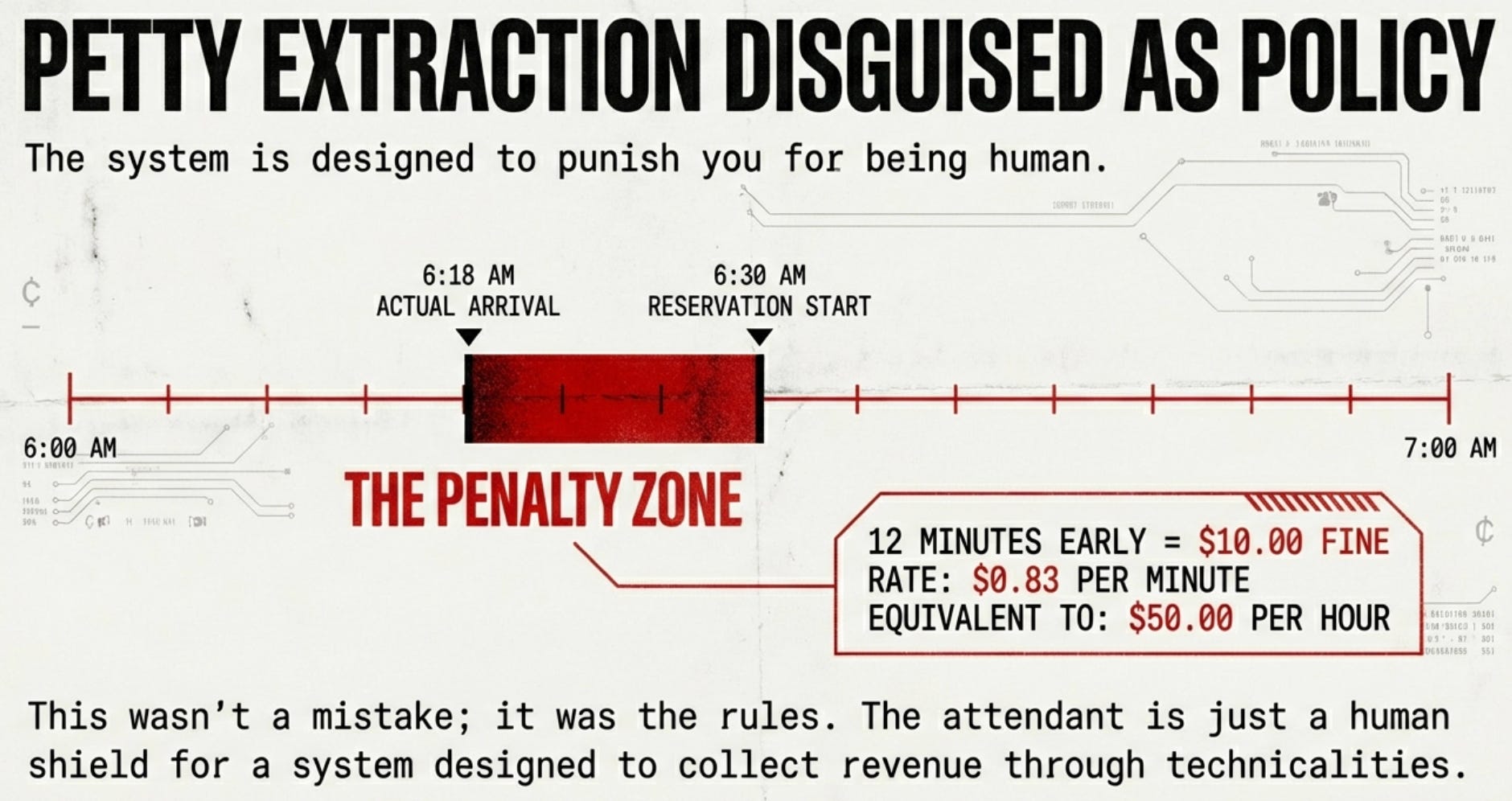
I booked a one-week parking reservation for 6:30 AM.
I arrived at 6:18 AM, twelve minutes early. And the attendant charged me an extra $10, a full extra day, because, technically, I arrived before my reservation.
That’s not a business model. That’s petty extraction disguised as “policy.”
Then I drove through the Bronx and got clipped twice
And just to keep the theme alive, I drove through the Bronx the other day and got hit with two speed camera tickets. Not for reckless driving. For doing 35 in a 25. Two separate $50 fines. So that’s $100 in penalties in one shot, for what felt like moving with traffic in a city where every block has:
lane merges
double-parked trucks
pedestrians stepping off curbs
random construction
buses cutting across
potholes
lights every 200 feet
Speed cameras are the perfect form of modern revenue:
automated
constant
no debate
no human judgment
small enough that most people just pay and move on
It’s a $50 cut. Not big enough to hire a lawyer but not small enough to ignore.
Then you get to the airport, and the fees get moral language
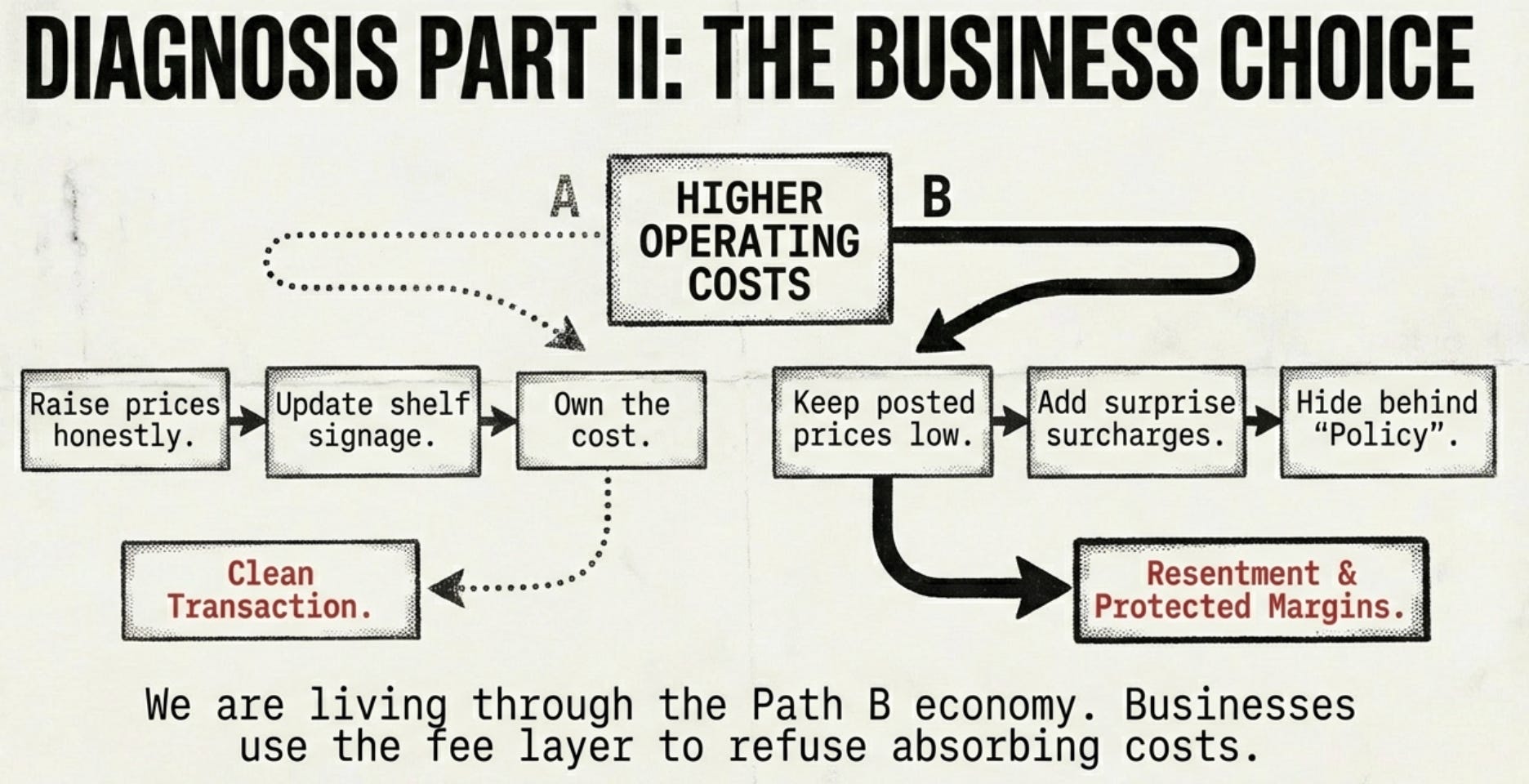
I’m not against workers getting paid fairly. If you clean terminals, handle baggage, escort travelers in wheelchairs, keep the airport running… you deserve a living wage, real benefits, and time off. That’s the intention behind policies like New York expanding wage and benefit protections for airport workers. However, the money doesn’t appear out of thin air. When the government sets higher labor standards, businesses have choices.
Instacart did the exact same thing; just with better UX
Instacart used to feel simple. Groceries delivered to your door.
Now you place an order, and suddenly your checkout looks like a phone bill from 2004.
service fee
delivery fee
priority fee
heavy order fee
small order fee
“regulatory” add-ons
plus item price markups you don’t notice unless you compare to in-store
plus tip, still framed as your moral obligation after you already paid the platform
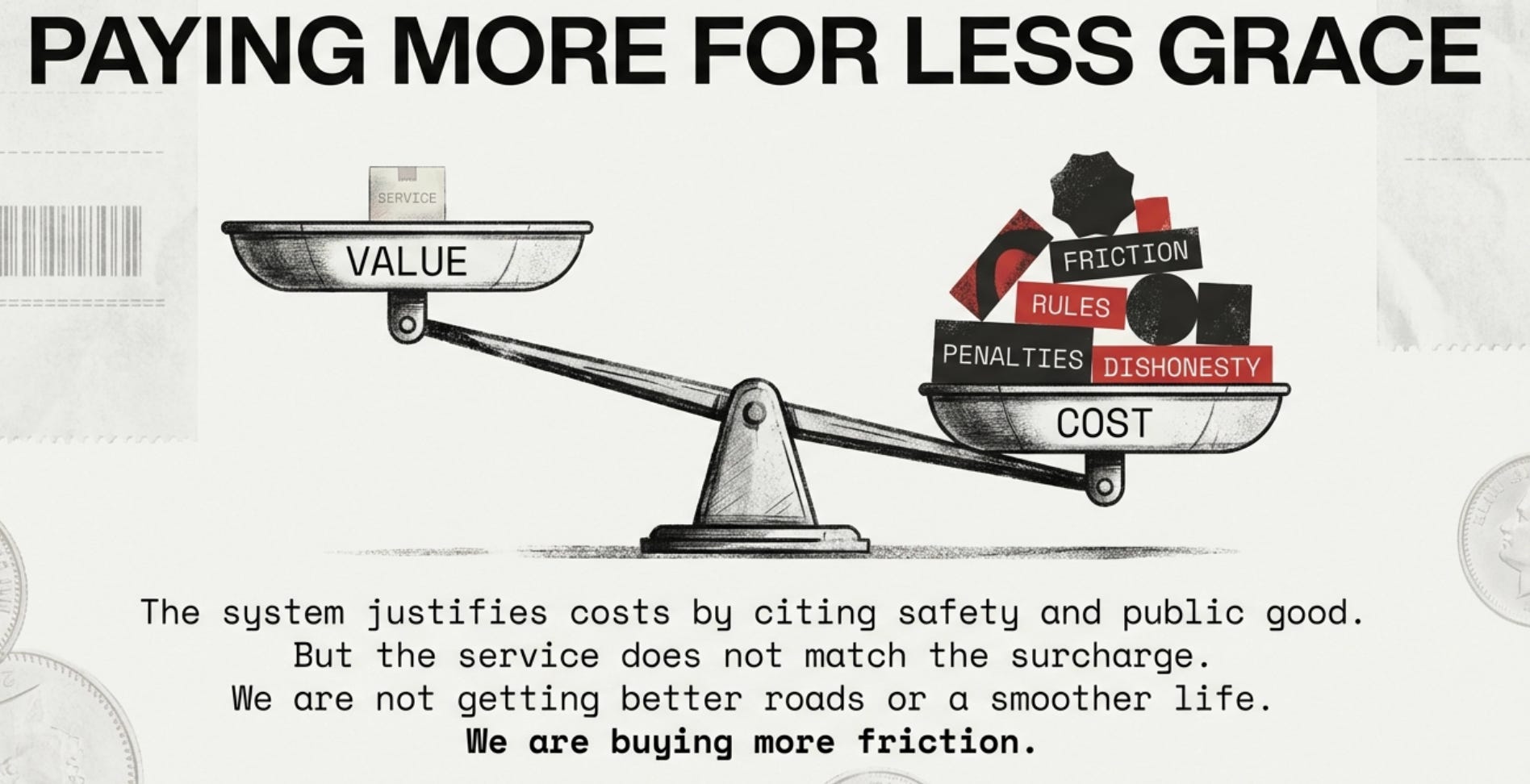
Same day, 10 years ago vs now (with numbers)
Here’s how the “death of a thousand fees” actually shows up financially.
Not a luxury day.
A normal day.
2015-ish: regular NYC-area day
Coffee + something small: $6
Two subway rides: $5.50
Basic lunch: $10
Toll/drive costs: $6–$12
Random fees: $0–$5
Total: $27–$38
2026: same day
Coffee + something small: $9
Two subway rides: $6–$7
Basic lunch: $16
Toll/drive costs: $12–$18
Random “life friction fees”: $5–$20
Total: $48–$70
That’s not “treat yourself” inflation. That’s basic existence inflation. And the biggest change isn’t prices; it’s the fee layer.
Now compare that to income growth
Here’s why people feel worse even if they’re making more than they used to.
Let’s say:
10 years ago
You made $100,000/year
Now
You make $140,000/year
That’s a solid increase: +40%.
But the costs didn’t rise 40%.
A lot of everyday costs rose more like:
groceries: +50–80%
transportation/tolls: +30–70%
housing: +50–100%
insurance: +30–60%
fees: up infinitely, because many didn’t exist like this before
So even with income growth, you still feel squeezed because the system is charging you more in places you can’t negotiate.
There is no “shopping around” for tolls.
No alternative bridge price.
No competitor airport.
It’s just: pay.
Conclusion: the consumer is the shock absorber for every system failure
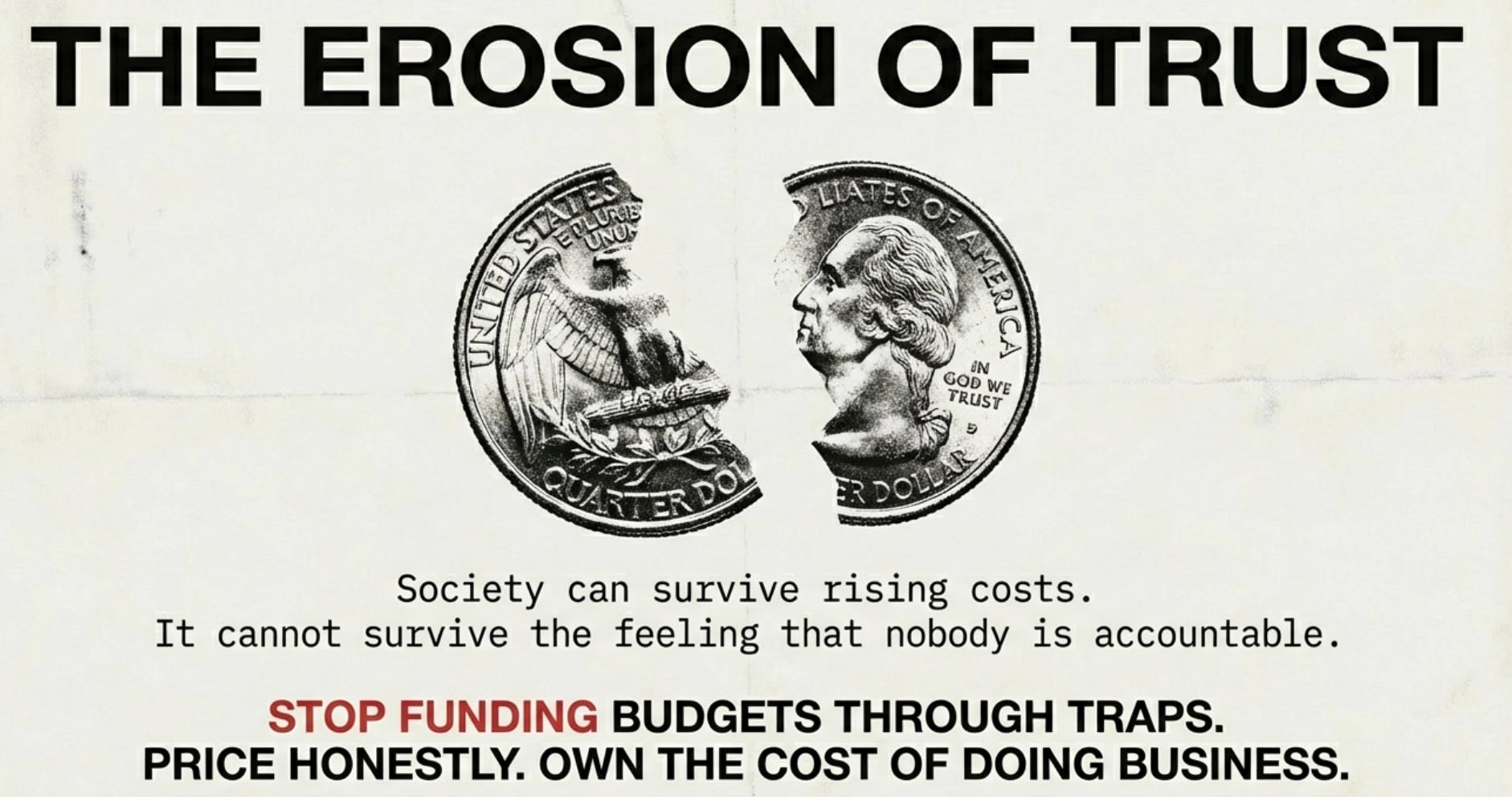
When institutions can’t fix themselves,they fund the gap by slicing the public. Not in one big visible way; in constant small invisible ways. And that’s why people aren’t just frustrated; They’re cynical. Because a society can survive rising costs.
What it can’t survive is the feeling that:
nobody is accountable
everybody passes the buck
and you’re the one who pays
If we’re going to pay more, fine.
But stop hiding it in surcharges.
Stop funding budgets through traps.
Stop turning daily life into a sequence of micro-penalties.
It feels like managed decline… funded one small fee at a time.
Images: NotebookLM, Ideas mine