

Americans feel powerless right now. Congress is gridlocked, and the courts move slowly. Outrage cycles burn for 48 hours and then disappear into the algorithmic void. Meanwhile, the current administration advances its agenda, praised by tech CEOs, surrounded by loyalists, insulated by wealth, and buoyed by market momentum.
However, if consumer spending drives roughly two-thirds of the U.S. economy, then the most direct, nonviolent lever available to citizens is coordinated economic action targeting companies whose stock performance and recurring revenue fuel the broader system.
Wall Street worships smooth retention curves and low churn. It is very common for companies to be built and optimized for inertia. That same architecture makes companies vulnerable to coordinated exit. If your product creates undeniable value, people won’t leave. If your growth depends on lock-in and psychological stickiness, you’re exposed.
Scott Galloway is a marketing professor at NYU Stern, a serial entrepreneur, and a frequent commentator on business, technology, and power. Through his books, podcasts, and public talks, he has built a reputation for analyzing how large companies actually make money and how markets shape political and social outcomes.
Recently, Galloway has been arguing that citizens who feel politically powerless still hold one form of leverage: their spending. He has publicly encouraged coordinated, time-bound cancellations of subscription services and shifts in consumer spending to create measurable pressure on companies whose revenue and stock performance influence the broader economic and political climate. He argues that executives may ignore outrage, but they do not ignore churn.

Galloway doesn't stop there; he extends his critique to consumer-facing companies with controversial government contracts, including those that enable ICE. He suggests canceling cable, switching carriers, and avoiding certain retailers. This targeted pressure is aimed at firms whose revenue and stock performance influence the broader market and, by extension, the political narrative of economic strength.
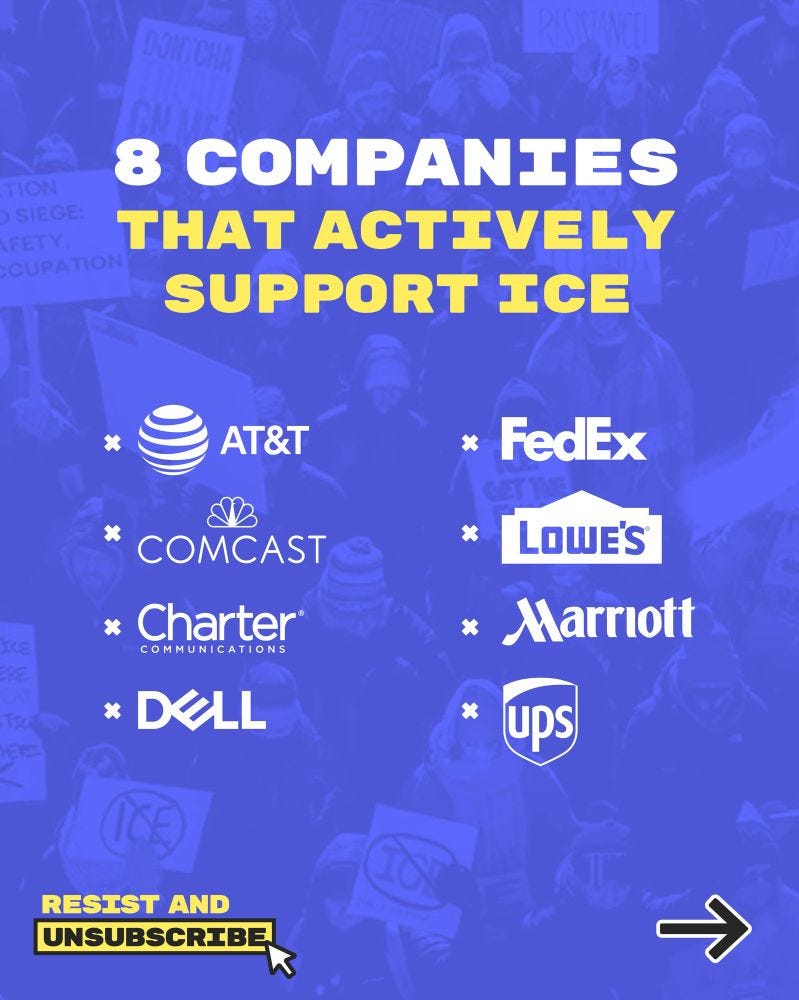
Some people rely on these platforms for income, connection, or accessibility. However, the question isn’t whether disruption is uncomfortable; it’s whether concentrated, time-bound economic pressure can create accountability where traditional institutions have stalled.
Now let’s run this through the MAC lens.
Does this tactic make transparent promises? The goal isn’t hidden: create measurable churn to force executive attention.
Does it create dependency or endless striving? No, it actually encourages the opposite: disengagement from addictive loops.
Does it respect attention and provide depth? That depends on execution. If it devolves into viral outrage with no coherent strategy, it becomes noise. If it remains focused and time-bound, it becomes a signal.
Does it rely on artificial urgency and FOMO? It shouldn’t. The power comes from coordination, not panic.
We are living through a trust crisis, with trust stagnating globally, widening trust inequality between high- and low-income groups, and rising fears of job insecurity tied to globalization, recession, and automation. When people feel economically squeezed and politically ignored, they reach for the lever they control: spending. You don’t need 60 Senate votes to cancel a subscription; you need 30 seconds and a decision.
“Resist and Unsubscribe” only gains traction in a marketplace already saturated with distrust. Whether you agree with Galloway politically is beside the point. This is a live experiment in economic leverage. We’re engineers of the very systems that can either withstand ethical scrutiny or collapse under coordinated exit. The question isn’t whether you like the tactic; it’s whether your brand could survive it.
When this guy who typically covers military and war issues, is talking about canceling big company services as a form of protest, the tipping point has been reached:
https://youtu.be/LIaVgKxAWt0?si=m48ItA9AGc5EglIr