

This month marks two years of the Marketing Accountability Council, and over the next few weeks, I’ll be writing reflections on where we started, where we’re headed, and what’s breaking (and changing) across marketing and business.
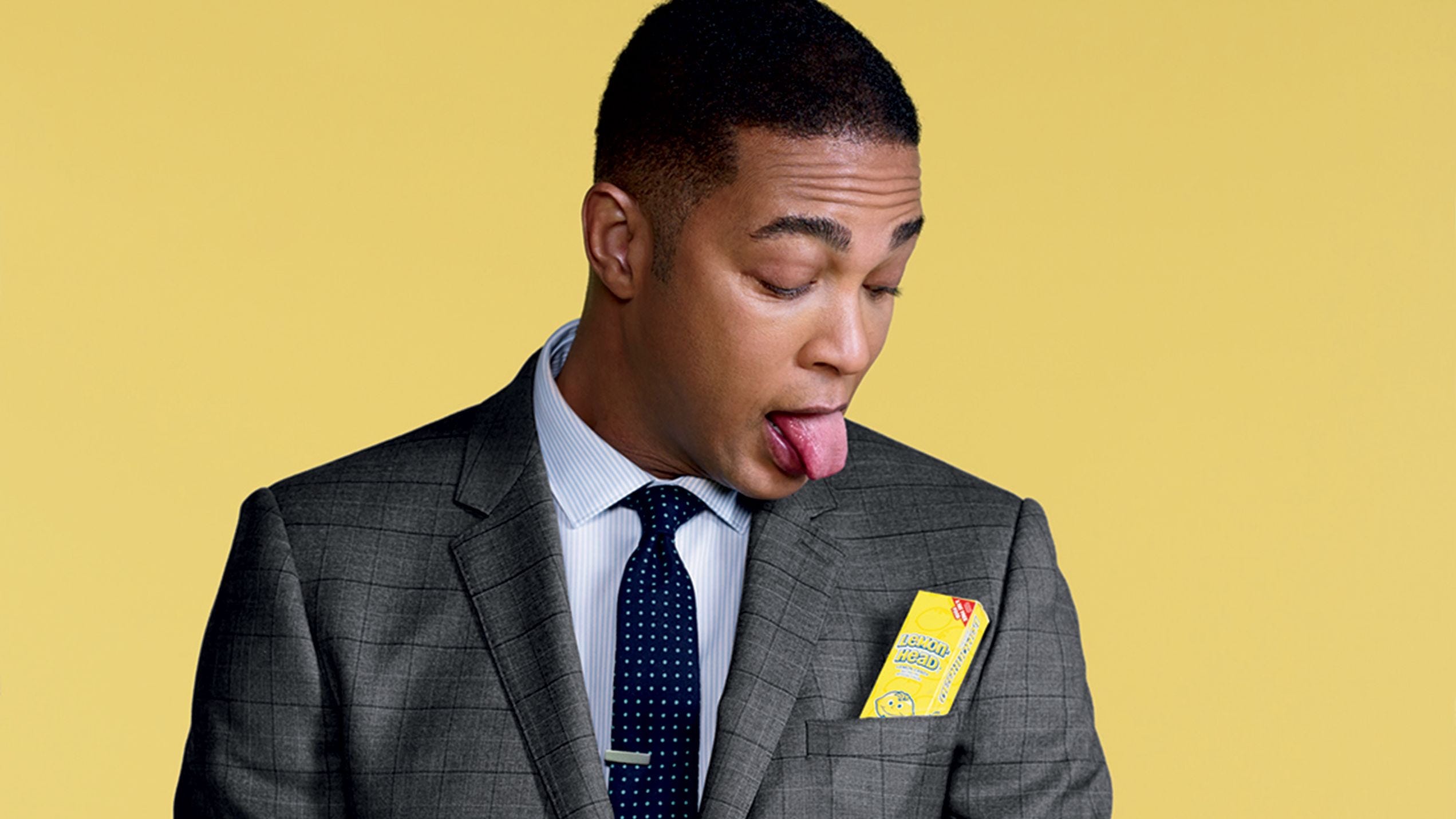
Also, I realize the universe handed us Don Lemon at the exact moment we needed a metaphor. So yes, I'm making lemonade out of Don Lemon.
Don Lemon was fired by CNN on April 24, 2023, a year before the MAC was formed, ending a 17-year run at the network. CNN said in a statement, “We’ve agreed to part ways”. Lemon immediately called BS after learning through his agent.
The “we agreed to part ways” shows up everywhere in corporate America. I have always thought this is lame, because truth doesn’t get stated; it gets managed, and companies use these statements to dodge accountability, control the story, and erase the person on the way out.
But the companies, especially those with a lack of clear strategy or something to hide, never seem to learn that the truth always comes out. Especially when the person you’re pushing out is outspoken, visible, and not afraid to speak his mind in real time, which was the job Don thought he had at CNN. Acting as you can quietly rewrite reality around someone like that isn’t just naïve; it’s insulting, not only to the person fired, but to everyone watching.
At the same time, CNN was under pressure to “reset” the tone of the network. Leadership wanted a version of CNN that looked more “straight,” less polarizing, more advertiser-friendly, and closer to a traditional newsroom identity.
Consequently, CNN shrank, and Don Lemon didn’t. CNN, trying to appeal to the center, or worse, to the right, was delusional. It wasn't a strategy. It was a lack of conviction. And that’s the critical fault, because conviction is exactly what people needed from the network at that moment.
When the world is chaotic and the stakes are high, audiences don’t go to the “neutral” outlet for comfort. They want an outlet that can name what’s happening without flinching. CNN didn’t lose viewers because it was too honest; It lost them because it stopped sounding like it believed its own voice. The network is now announcing layoffs and restructuring to pivot toward digital, tacitly admitting that the era of cable dominance is over.
There are parallels to what is happening to cable news and radio. Radio didn’t die because people stopped loving audio; it died because it stopped loving its audience. Once a raw, opinionated, and human medium, radio lost its soul when corporations sanitized it into submission. DJs became risk-averse robots, local flavor was replaced with cookie-cutter playlists, and real connection gave way to forced chumminess. Worst of all, the commercials became louder, dumber, and more insulting, treating listeners not as people but as profit extraction points. As a result, audiences fled to Spotify, YouTube, and podcasts, places that respect their time, attention, and intelligence for the most part. Today, ad-supported radio is in survival mode, trapped in a business model that relies on interruptions people no longer tolerate. With listeners now aware that their attention is currency, their data is exploited, and their time is not disposable, the trust is gone, and unless traditional media radically reclaims relevance, it’s not coming back.
CNN is in the same boat. When you trade voice for “balance,” you don’t become more trusted; you become more forgettable. The product turns into background noise. And once your audience learns they don’t need you, they stop coming back.
In the meantime, Don Lemon is building something braver now, freer, and far more dangerous to the status quo. When he was hired by CNN, his role and his paycheck depended on maintaining tone, protecting relationships, and keeping the machine stable. If you comply, you lose part of your soul, and if you step out of line, there are consequences.
That’s what the upstart media landscape channels like Substack reward right now. We are seeing an increase in decentralized distribution, intimate formats, direct audience relationships, and voices that are willing to risk something to say something. And it’s working.
Lemon recently publicly stated that his independent digital show is on pace to surpass what he was making at CNN, if the growth holds, which signals the economics of relevance are moving away from institutions and back toward individuals who can sustain belief, attention, and support without the old distribution gatekeepers.
And the broader ratings data support the direction of that migration. CNN’s 2025 performance reflected a declining audience in key dayparts. Adweek’s 2025 cable news report shows CNN averaging 573,000 primetime viewers for 2025, down year-over-year in both total viewers and the A25-54 demographic, which reinforces the pattern that the legacy networks are not expanding trust; they’re managing decline.
Then came the moment of the arrest. Don Lemon was arrested by federal agents at a Los Angeles Hotel while he was covering the Grammys weekend, despite saying he had offered to turn himself in through counsel. About a dozen agents showed up, handcuffing him and holding him for hours. The charges relate to Lemon’s presence at and coverage of an anti immigration protest that disrupted a church service in St. Paul, Minnesota. Lemon’s position is that he was acting as a journalist, not a participant, and that the arrest was designed to intimidate and embarrass him. By Lemon’s account, his attorney attempted to coordinate a voluntary surrender. Instead, the arrest happened in a high-visibility way; a public, controlled humiliation, in a context where cameras, celebrities, and attention were already concentrated.
Instead, the arrest was timed for maximum visibility, turning a journalistic presence into a spectacle of punishment. It was public, strategic, and humiliating; exactly the kind of optics play designed to send a message. And let’s not even start on what this says about press freedom in 2026. When holding a point of view becomes grounds for criminalization, something fundamental has cracked in the civic spine of our society. But that’s a topic for another day.
In the old system, a network acts as insulation. It comes with legal muscle, institutional leverage, and the ability to negotiate the temperature of conflict behind closed doors; Independent journalism doesn’t have that buffer, and as a result, the risk profile changes.
If you zoom out, that’s the larger media realignment: institutions optimized for polish and stability, while audiences keep moving toward proximity, voice, and credibility earned in public. Because the legacy model no longer feels honest.
The Washington Post is in trouble right now because it tried to sell “power to the people” while operating like “power stays with the billionaire.”
Under Jeff Bezos, the Post maintained its moral posture as a watchdog for democracy, a defender of truth, a paper that holds power accountable. But the business moves, the internal direction, and the ownership reality created a contradiction that the public can feel instantly. You can’t claim you’re fighting concentrated power while being owned by one of the most concentrated power figures on Earth. Even if Bezos never touches a headline, the credibility tax is baked in.
That contradiction turned into measurable damage. The Post reportedly lost $77 million in 2023 and an estimated $100 million in 2024, and leadership has now responded with what they called a broad “strategic reset,” including layoffs of one-third of staff. That’s not a trim. That’s a survival move. And survival moves always come after the brand has already lost momentum with the audience.
The “power to the people” story really snapped when Bezos blocked the Post from making a 2024 presidential endorsement and framed it as a principled step to protect trust. The audience didn’t read it as a principle. They read it as ownership. Reuters reported that more than 200,000 subscribers canceled after the decision. That’s the moment the public stopped debating the Post’s intentions and started acting on their instincts: this is a billionaire-controlled institution pretending it isn’t.
Now the reset looks like the dismantling of what made the Post feel like a full-spectrum civic institution. The restructuring includes shutting down or shrinking major parts of the newsroom footprint, including dissolving sports “in its current form,” closing the Books section, suspending the Post Reports podcast, and pulling back international coverage. In plain terms, the Post is retreating into a narrower, more centralized version of itself right at the moment the public is abandoning centralized authority.
That’s exactly why the Bezos/Post story mirrors Don Lemon/CNN. CNN tried to protect itself by smoothing out sharp edges and managing risk. Don Lemon didn’t fit that posture because he was a human being with a point of view, not a controlled asset. In a world where audiences can choose independent voices daily, “responsible neutrality” looks less like integrity and more like reputation management.
In this fractured media ecosystem, trust is no longer granted to institutions that prioritize “comfort” and safe programming; it is earned by those willing to disrupt the “illusion of control” and speak with the sharp, unsoftened authenticity that the current moment demands. CNN was a huge guaranteed salary, but it also had power. Now he’s building something he owns; his audience, his platform, his future upside.
In the same way CNN has lost relevance, the old marketing guard is doing the same to marketing. Marketing is in the same place. Institutions like the ANA and MMA cling to “objectivity” while lobbying against the very reforms they claim to support. Brand Innovators flatter marketers while selling them out to vendors. These systems don’t need another round of panel discussions; they need a reckoning.
The ANA positions itself as a guardian of ethical marketing, but its actions tell a different story. It has repeatedly opposed meaningful federal privacy regulation, lobbying instead for industry “self-regulation.” In practice, that means defending the unrestricted collection, sharing, and monetization of consumer data—while simultaneously preaching trust, transparency, and now authenticity. That’s not confusion. It’s a contradiction. You can’t ask for public confidence while fighting the guardrails that would make that confidence justified. This is how trust erodes at scale.
MMA Global presents, which I hesitate to mention in this essay because it is increasingly lame, is a different kind of failure: an identity collapse. What started as the Mobile Marketing Association had a clear purpose grounded in a specific moment. But instead of evolving that clarity, it buried it under a vague, overextended rebrand. Now “MMA Global” floats in strategic ambiguity, trying to cover everything from AI to CFO alignment without staking a coherent point of view. It’s not clear who they serve; just that they’re still charging membership fees to brands that joined under a different name. When renewal is easier than reinvention, inertia wins.
Brand Innovators is something else entirely; performative flattery wrapped in the costume of professional recognition. I was once named to their “40 Under 40” list, an accolade with no clear criteria beyond being under 40 and visible enough to serve their event agenda. I gave speeches that directly challenged dominant marketing practices, only to be approached afterward by sales reps pitching tools that blatantly contradicted what I’d just said onstage. It felt like a bait-and-switch. The platform looks like recognition, but it’s really bait for vendors to hijack your credibility and push their wares. The result is a feedback loop of ego inflation and corporate exploitation, where truth is tolerated as long as it doesn’t interfere with the sales pipeline.
What Don Lemon is doing for media, the Marketing Accountability Council is doing for marketing: building a system that centers truth, earns trust, and risks friction in service of clarity.
Because when the old containers no longer fit, you don’t beg them to stretch.
You build new ones.
Couldn't agree more. I truely wonder why corporations still believe these bland 'part ways' statements work, especially when the internet ensures truth finds a way out. It’s so insightful how you highlight their attempt to erase people from the narrative. What do you think is the key to shifting this deeply ingrained corporate habit towards genuine accountability?