

Happy Memorial Day! It’s the unofficial start of summer. The grills are fired up, the smell of charcoal is in the air, and you’re probably scrolling through your phone with a cold drink in one hand and a plate of burgers in the other.
But as you look at those perfectly charred ribs and flawless potato salads on your feed, it’s time for a reality check. That comforting, all-American holiday content you are consuming might be completely fake. Welcome to the ultimate holiday buzzkill: the hyper-targeted, AI-generated illusion of summer.
The Simulation on Your Smoker
You might think you’re just looking at a backyard BBQ video from a fellow griller. But behind the scenes, e-commerce brands are using tools like JoggAI, HeyGen, and Shhots AI to manufacture a reality that never happened.
That “backyard pitmaster” giving you a recipe for a new algorithmic BBQ rub? It could easily be a synthetic AI influencer.
The “UGC” Lie: Brands no longer need to hire a real person to stand over a hot grill. They can feed a product link into an AI tool, select a “relatable” avatar, and generate a video of a fake human praising a product in minutes.
The Psychological Hook: If you recently searched for diet tips, the algorithm won’t just show you a burger; it will dynamically serve you an AI avatar pitching a “gut-health supplement” to take right after your Memorial Day feast so you don’t ruin your summer body.
The Culture of the Bypass
There is a profound, unsettling connection between our current cultural obsession with Ozempic and this new wave of AI marketing.
Ozempic changed the game by separating the result (weight loss) from the process (diet and exercise). AI video tools do the exact same thing for corporate marketing. They bypass the messy, expensive, human process of actually creating something real.
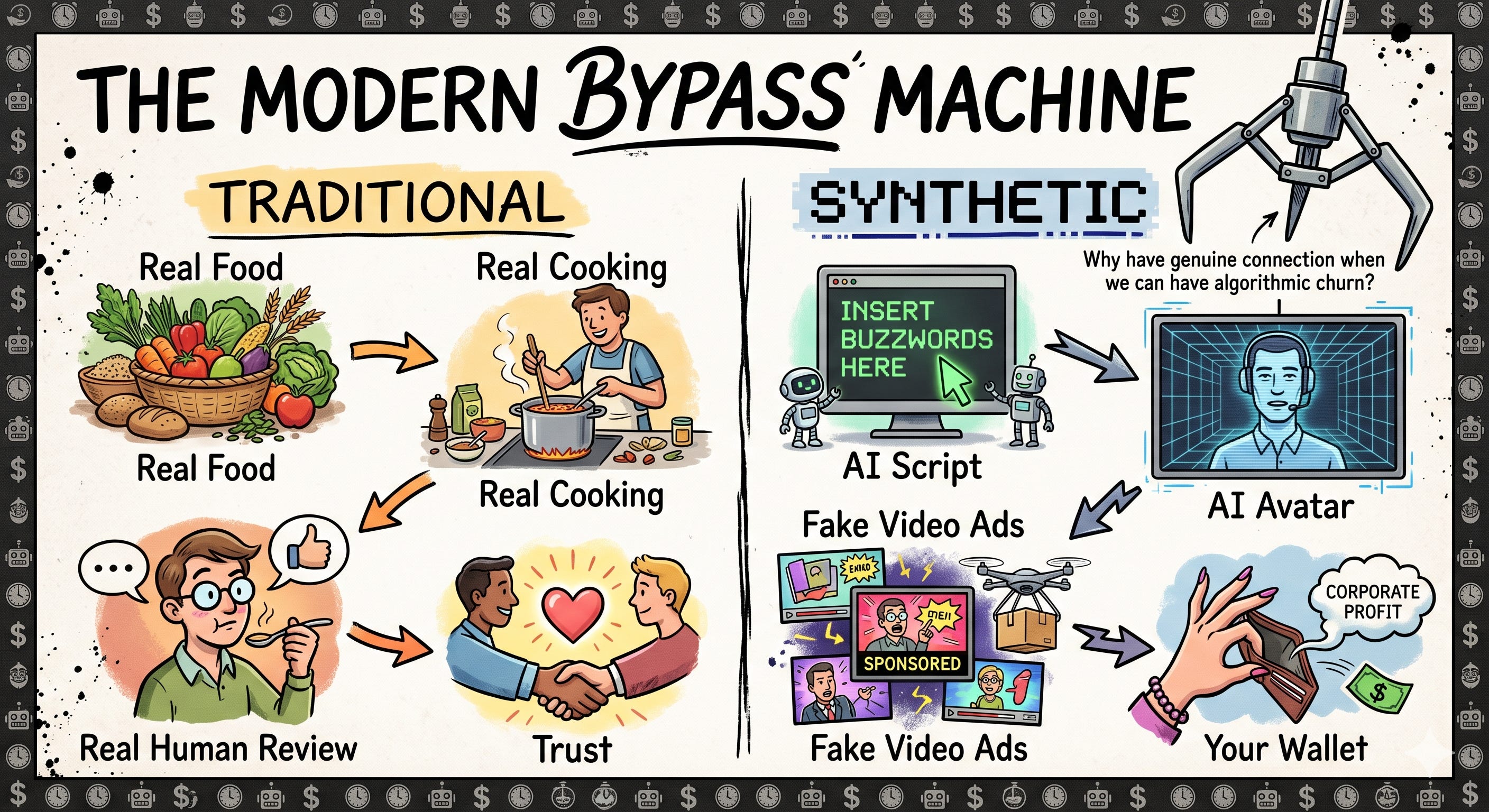
When an AI influencer tells you that a specific supplement allowed them to eat hot dogs all weekend without gaining a pound, it is a double simulation. The avatar has no digestive tract. The supplement was created to exploit an algorithmic trend. The entire narrative is a hallucination engineered to trigger your insecurities while you’re trying to enjoy a holiday weekend.
What is Even Real at This Point?
As you sit on the patio today, consider how much of your digital environment has been simulated:
The People Aren’t Real: AI avatars now have perfect micro-expressions, realistic blinking patterns, and vocal imperfections designed to mimic human authenticity.
The Consensus Isn’t Real: The comment sections praising these products are frequently populated by automated bot networks giving the illusion of social proof.
The Only Real Element: You. Your attention, your data, and your credit card.
The Memorial Day Reality Check
We have entered an era of “Hyperreality,” where the simulation of a perfect summer day is more profitable than the day itself. The internet is no longer a place where we discover real things; it is a matrix that synthesizes content on the fly to exploit whatever you looked at five minutes ago.
So today, do yourself a favor. Put the phone face down on the picnic table. Ignore the hyper-optimized video ads trying to sell you a quick-fix supplement or a magic grill accessory. The AI avatars can’t taste the brisket, and they certainly don’t care about the holiday. Turn to the actual, unoptimized, beautifully flawed humans sitting next to you—because right now, that’s the only real thing left.