

This piece is part of a larger historiography series where I’m breaking down how modern marketing got to where it is, to actually understand the path we took so we can stop repeating the same mistakes under different names and frameworks. Read the previous historiography on how demand generation become the most prominent marketing strategy in B2b.
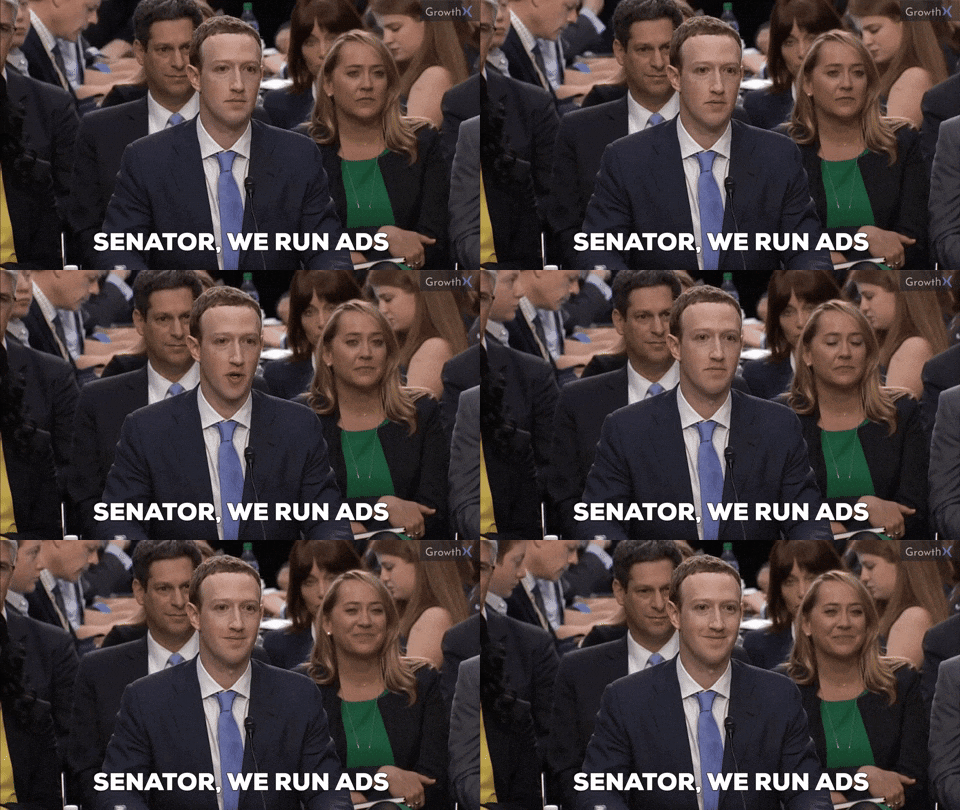
One of the most persistent complaints you’ll hear from B2B marketers is around leadership’s lack of understanding around marketing. Whether it’s in community discourses, at conference happy hours, or in the kind of candid LinkedIn posts that get way more engagement than anyone expected, it’s some version of the same compliant. They don’t appreciate brand and don’t value customer research. They don’t care about positioning or the slow work of building trust. All they want to hear from marketing is how we contributed pipeline.
No matter what you do, your value is solely tied to revenue. But all the things that will get them revenue (outside of leads and ads) they don’t want to do. How about we invest in community? Nope. Maybe we can create a cool in-person experience? Don’t have money for that. What if we run a super unique brand campaign with a micro-influencer? How many leads can we expect from that? It’s exhausting.
It’s no wonder that the logical conclusion most marketers arrive at is that leadership stopped understanding marketing. The business got financialized (not sure if that’s a word but just got with it). They became obsessed with spreadsheets and forgot that customers are humans and not just conversion events in a funnel.
I’ve told that story for a long time. I wholeheartedly believed it, in my spirit. But after spending a significant stretch of time digging into the history of how marketing’s role inside organizations had evolved, reading about the rise of modern management theory, the financialization of business, the shift in how companies related to market information, I’ve concluded something a bit different. I don’t think executives have stopped understanding marketing. I think business has evolved and leadership determined that they needed a different version of marketing than the one they were getting. Now whether their belief is true or not is what we’re about to dive into.
To really understand how we got here, you have to go back further than we have in our previous historiographies, back to a time when information about markets was genuinely, structurally scarce. Scarce as in, companies had almost no systematic visibility into why customers bought what they bought, what competitors were really doing, or how market preferences were shifting.
Imagine running a manufacturing business in 1955. You sell industrial equipment to buyers across the country. You have a sales force, distributors, and your means of marketing is trade publications you advertise in. But if you want to understand whether your customers are satisfied, or whether a competitor is gaining share in the Midwest, or whether purchasing patterns are shifting because of some macroeconomic or environmental pressures, there is no dashboard for that. There is no intent data provider who can tell you which companies are researching your category. All you have is people doing fieldwork to build relationships.
This is the context in which the marketing function was built, and it explains why marketing once held a genuinely powerful strategic position inside organizations. Understanding what was happening in markets required dedicated human expertise, and the people who had developed that expertise were in marketing. The board looked to marketing because marketing was their primary window into the external reality on the ground.
This is also why the four Ps (product, price, place, promotion) were actually a coherent strategic framework when they were developed. Marketing’s influence touched all four of them, because all four of them required understanding markets. Should we build this product? Marketing had a view. What should we charge? Marketing understood what buyers valued and what they’d pay. How should we distribute it? Marketing understood the channel and the customer behavior that made channels work. Promotion was almost a downstream question, the final output of all that strategic thinking.
The modern marketing department often operates almost entirely in promotion. The job now is to create content and campaigns, put on events, all to generate leads. Over a period of decades, the structural conditions that made marketing’s broader role indispensable, all but disappeared.
The first big structural shift started in the late 1990s and accelerated through the 2000s. The birth of the internet. The internet didn’t just create new marketing channels. It fundamentally disrupted the economics of information, including the economics of market information that marketing had historically been responsible for gathering and interpreting.
Suddenly executives could see things that had previously required weeks of research to approximate, nearly instantly. Website traffic, updated in real time. Email open rates and click patterns. Lead behavior through a funnel. Competitive activity visible in search results. Customer feedback flowing in through review sites, support tickets, and NPS surveys. The sheer volume of information available to a business leader in 2005 would have seemed like science fiction to their counterpart in 1985.
This created a major shift in where organizations sourced their market intelligence. They started relying less on marketing’s ability to gather and interpret market information, and more on technology’s ability to deliver market data automatically. And on the surface, that sounds like an upgrade. Who wouldn’t want more information, faster and cheaper.
But information and understanding are not the same thing. Information tells you what happened. Understanding helps you figure out why. Information tells you that a campaign got a lot of clicks but few conversions. Understanding tells you what story those buyers were telling themselves when they clicked, why it didn’t match the story on your landing page, and what you’d need to change to close that gap.
The assumption that information and understanding are interchangeable became one of the foundational mistakes of modern B2B marketing strategy. It was a mistake organizations drifted into, as the tools got better and the data got richer and it became easier to believe you understood your market because you could measure it.
Running parallel to the information revolution was a quieter transformation in how businesses thought about themselves. And this is the one thing that, in my experience, B2B marketers almost never discuss, even though it might be the most important context for understanding why the relationship between marketing and executive leadership looks the way it does today.
Business has always cared about money, that’s not what changed. What changed was the extent to which the logic of finance began governing the internal language and decision-making apparatus of the entire organization, not just in the finance department. Economists call this financialization, and while the word sounds comically academic, the lived experience of it is something most B2B marketers will recognize immediately.
It starts, historically, with the rise of shareholder value theory in the 1980s. The idea, popularized by Milton Friedman and institutionalized by a generation of business school curricula, that the primary purpose of a corporation is to maximize returns to shareholders. This sounds like a financial philosophy, and it is, but it has deeply practical consequences for how organizations operate day to day. If shareholder value is the goal, and shareholder value is primarily expressed through financial metrics that capital markets can evaluate and price, then the internal language of the organization gradually tilts toward the metrics those markets care about. Quarterly revenue, margins. growth rate, predictability, etc.
Then came venture capital, then growth equity, then the explosion of SaaS and recurring revenue models, and with it the whole ecosystem of financial metrics that now basically define how B2B companies talk about themselves. CAC. LTV. Payback period. ARR growth. Net revenue retention. MRR. Churn. Pipeline coverage. Rule of 40. On and on.
Each of these metrics has some usefulness for understanding something about a business. But taken together, they represent a complete language. A way of describing what’s happening in a business that prioritizes the things that can be modeled and predicted and compared across companies at a portfolio level, and systematically undervalues the things that are harder to quantify. Things like customer trust, category perception, organizational reputation, brand.
The question at the center of this new financial language isn’t “what does the market want?” It’s “can this growth be predicted?” Those questions might look similar on the surface, but they point in completely different directions. One is oriented toward understanding. The other is oriented toward control. And as boards and executives and investors increasingly organized their work around the predictability question, they naturally elevated the functions that made the future feel more controllable. Departments like finance, operations, revenue operations, and sales planning. They asked marketing to speak this language too. And marketing, eager to be taken seriously, obliged.
Here’s where it gets genuinely interesting, to me at least. Once you understand that the executive suite reorganized itself around predictability, you start to understand why the markets themselves, actual markets with actual human beings in them behaving in ways that are messy and emotional and often contradictory, started to feel like a problem to be managed rather than a reality to be understood.
A market is a living thing, full of buyers who change their minds for reasons that don’t always have obvious causes, who are influenced by cultural shifts and peer conversations and things that happened to them in prior purchasing experiences and half-remembered articles they read on their phone at 11pm. A market can be going extremely well by every measurable indicator and still be quietly building up a reservoir of buyer skepticism that won’t show up in any dashboard until it’s already cost you three major renewals and four mid-funnel losses in a single quarter.
On the other hand, a financial model behaves according to its assumptions. You can stress-test it, scenario-plan against it, present it to a board with confidence that when someone asks a pointed question, you can point to the cell and the formula and explain your logic. There is nothing irrational about preferring to work with a model. Except that the model is not the market. It is a representation of the market, built on assumptions that were reasonable at the time they were made and that may or may not still hold. As time went on, many organizations began relating to the representation of the market and not the reality of it. They were tuning the model, optimizing toward the model, making decisions based on what the model said rather than what actual humans in the market were actually doing and thinking and feeling.
The shift I’ve been describing was not imposed on marketing from the outside. Marketing helped build it, understandably. Marketing had a deep desire to be taken seriously inside organizations that were increasingly operating in a financial language that marketing hadn’t been trained to speak.
For the better part of two decades, marketers fought hard for credibility inside organizations that often treated them as the department that made PowerPoint slides and ordered branded swag. They wanted a seat at the strategic table. They wanted to be seen as accountable for business outcomes, not just for activities. Those were legitimate goals. So, most marketing functions tried to gain credibility by adopting the language of the systems executives already trusted, pipeline, attribution, MQLs, revenue influence, conversion rates, lead velocity and trying to demonstrate that marketing could be as measurable and predictable as the functions that already enjoyed executive confidence.
What marketing didn’t fully account for was that once it started competing on those terms, it was entering a game it was always going to lose. Finance will beat marketing at financial modeling every single time. Revenue operations will out-forecast the marketing team. Sales planning will out-pipeline-manage any demand generation function. None of these are commentary on marketing’s intelligence or capability. Marketing’s distinctive contribution was never its ability to build better models. It was its ability to understand the humans those models were trying to describe. And in the scramble for organizational credibility, that contribution got devalued, sometimes by executives who didn’t know what to do with it, and sometimes by marketers themselves who were so focused on speaking the financial language that they let the human language wither and die.
I want to be direct about something. This is not an argument for going back to some romanticized version of marketing’s past. The world that made marketing the organization’s primary interpreter of market reality no longer exists. Information is abundant. Executives have access to more data about their markets than any prior generation of business leaders.
But here’s what I keep coming back to, and it’s something that I think represents a genuine strategic opportunity for B2B marketers willing to make the case for it. The systems that replaced marketing’s interpretive role have become remarkably good at measuring what already happened, and increasingly bad at helping organizations understand what is about to happen. The financial models and pipeline dashboards and attribution platforms are retrospective by design. They tell you where you’ve been. But they have almost no capacity for sensing when the dynamics of a market are shifting in ways that no historical patterns or models can detect. They can’t tell you that buyers in your category are quietly growing exhausted with a vendor narrative that hasn’t evolved in ten years. They can’t tell you that a regulatory change in a similar industry is about to reshape what your customers prioritize in their purchasing decisions. They can’t tell you that the problem you’ve been solving is starting to feel less urgent than a different problem that a competitor is beginning to define and own.
All of that is still the domain of human understanding. It requires talking to actual buyers and actually listening to them rather than validating hypotheses you already had. It requires being curious about the cultural and organizational environments in which your customers operate.
That is what marketing was built to do. The foundational capability that made marketing strategically important was understanding markets, in the full, messy, human sense of that phrase. And the question that I think every B2B marketer has to sit with is whether they are actually doing that as a genuine organizational competence that they can point to and defend and connect to business decisions that matter.
The board didn’t stop caring about customer. They just stopped looking to marketing for market analysis because modern business built faster, cheaper, cleaner systems that appeared to deliver market truth in a format executives and investors trusted. The tragedy is that many of those systems are excellent at quantifying what buyers have already done, and nearly useless for understanding what buyers are beginning to believe. And that gap, between what the model says and what the humans in the market are actually doing, is exactly where marketing can become indispensable again.
Follow Moni Oloyede at https://www.linkedin.com/in/moni-oloyede/
If you want help reconnecting to your marketing, sign up for MOM’s Weekly Newsletter Let’s bring the soul back to your strategy.