

If you watch The Eric André Show, you might think being Eric André is a blast. It looks like a fever-dream playground where you get to smash desks, stress out C-list celebrities, and get paid to run around in a neon green morph suit.
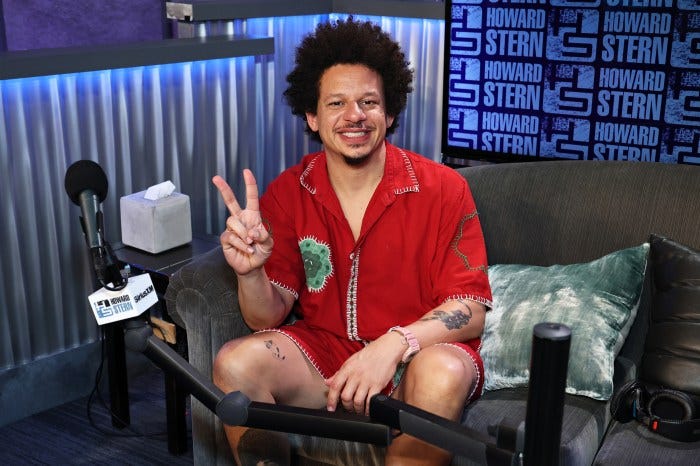
But if you listen to André talk about his craft, especially his recent sit-down on The Howard Stern Show while promoting his new Netflix film Little Brother, a very different picture emerges.
According to Eric André, being a professional comedian today is a grueling psychological war of attrition in which the landscape is actively crumbling beneath your feet.
According to Andre, this is what it is like to make a living in comedy in today’s devolving media landscape:
1. Traditional Cable TV is Formally “In the Graveyard”
We tend to think of legendary alternative comedy hubs like Adult Swim and Comedy Central as permanent institutions. André flatly states that the legacy structures that gave rise to his career are now dead or unrecognizable due to constant corporate mergers, mix-ups, and studio consolidations.
“The network I was on doesn’t really exist in its old form... Beyond like Daily Show clips, which I watch on YouTube, I don’t even have Comedy Central. I don’t have cable anymore.” The structural collapse means that the mid-budget, experimental safety nets for weird art have vanished.
2. Comedians Are Literally “Homeless”
Because of network consolidation, the avenues to actually get a show on the air have shrunk from a dozen competing networks to exactly two tech behemoths.
“Comics now are kinda homeless if they want to do a television show,” André explained. “If you pitch a show to Netflix and they pass, and you pitch a comedy show to HBO and they pass, that’s kinda it. There is no more Comedy Central or Adult Swim.”
Because everyone is forced to crowd into the same two entryways, André notes that HBO and Netflix have cups that “overfloweth,” giving corporate executives all the power to say no.
3. The Pitching Nightmare
Even with global name recognition, André has faced total rejection trying to get his newest show, Taboo, off the ground. He pitched the concept—which he describes as “Anthony Bourdain meets Jackass,” using illegal, controversial, and extreme local taboos to tap into a country’s culture—to both Netflix and HBO. Both passed.
“They’re more touchy now. Nobody wants controversy like they did before... Executives don’t want internet backlash, but the people still do. They wanna see something shocking that they can’t get anywhere else.”
4. Forced Into the DIY YouTube Grind
With television options dried up, André admits the state of comedy is forcing creators backward into a self-funded, fiercely independent digital landscape.
If he wants to bring The Eric André Show back to life, he told Howard it will likely have to be on YouTube or a social media outlet. The catch? You have to navigate the entire system alone, find your own capital, and self-fund the madness. “It’s a bit DIY at first, and it’s tough. To make that kind of comedy now... it doesn’t have a home yet.” ---
Why Do It?
If the networks are inactive, the remaining executives are paralyzed by fear of internet comments, and you’re pitching show segments about unconventional topics to silence, why continue? Because to André, the audience’s appetite for raw, unfiltered, and genuinely surprising content hasn’t changed—even if the suits are afraid of it. He persists because breaking through the polished, dull, and predictable television landscape isn’t just a career move anymore. For an alternative comedian, it’s a matter of survival.
What do you think? Is the consolidation of TV suppressing innovative comedy, or will the YouTube DIY model lead to a new era of even more unpredictable humor? Let’s discuss.
